文章内容
爬山日记怎么写:从出门到回家的五步法
写爬山日记,第一步不是写山,而是写头两行格式。第一行写日期和星期,第二行写天气,比如十月二十五日星期六,晴,早上有点凉。这两行是日记的门牌,写日记就像给这一天的自己留一张纸条,门牌写清楚,以后翻本子才知道是哪一天。有的小朋友把天气写成今天天气晴朗万里无云,太长了,直接写晴或者多云转晴就够。
第二步写出门。不要写八点整我们兴高采烈地出发了,写一个真实的动作就行:妈妈六点四十就在客厅喊起床,我带着昨晚装好的水壶出门,水壶太重,走到楼下就换到左手。出门这一段的任务是把时间、和谁去、带了什么交代清楚,一句话带一个信息,两三句就停。
第三步写山路上的观察,这是整篇日记最值钱的部分。蹲下来看比站着看有用。假设你在石阶缝里看见一只西瓜虫,碰一下它就卷成一个小球,再碰一下,它慢慢伸出头。把动作的顺序记下来:先看见什么,碰了以后它怎么样,你做了什么,它又怎么样。野花也一样,写它长在什么地方、花瓣几片、什么颜色,不用写它有多坚强,那是大人想的事,你只写你眼睛看到的。
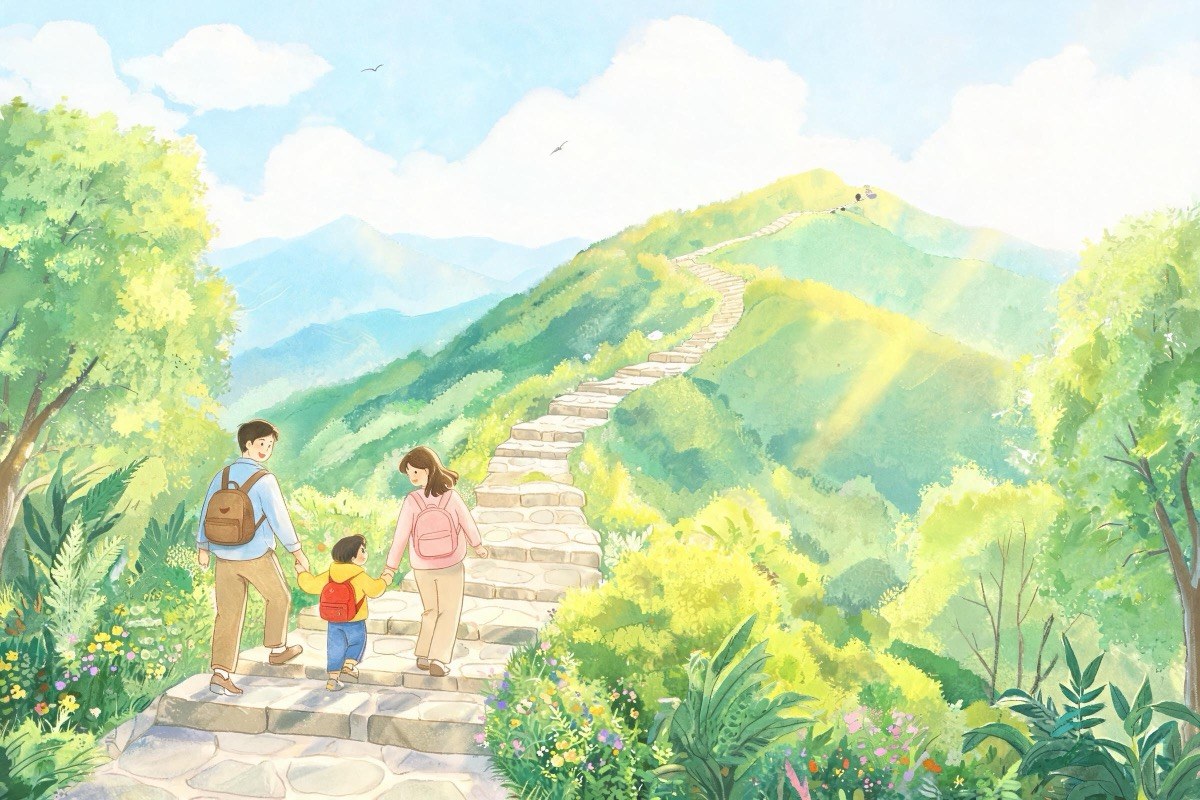
第四步写一件和家人之间的小事。爬山路上一定有小事:爸爸走错岔路被妈妈笑,半山腰分吃一个橘子,爷爷坐在亭子里等我们追上来。挑一件写,写清楚谁说了什么话。假设爸爸说前面近,结果越走越远,妈妈笑着说下次听导航的,这一句对话写进去,日记马上就有家里的气味。
第五步写回家路上和收尾。身体感受最诚实:腿有点抖,下楼梯要扶着栏杆;书包带子在肩膀上勒出红印。收尾不要写今天真是有意义的一天,写一个具体的小动作或者小念头:晚上泡脚的时候我想起那只西瓜虫,希望明天石阶缝里它还卷成一个小球在睡觉。五步连起来,一篇三百字左右的日记就齐了:格式、出门、观察、家事、回家。每步两三句,哪一步没东西写,就回到那座山再想一遍当时眼睛看到了什么。
How to Write a Hiking Diary: Five Steps from Leaving Home to Getting Back
The first step of a hiking diary is not the mountain but the two header lines. Line one is the date and weekday, line two the weather, for example Saturday October twenty fifth, sunny, a little cold in the morning. These two lines are the nameplate of the diary; writing a diary is like leaving a note to yourself on that day, and the nameplate tells future you which day it was. Some children write the weather as the sky was clear and cloudless, which is too long; just write sunny or cloudy turning sunny.
Step two is leaving home. Do not write we set out happily at eight; write one real action: Mom shouted get up in the living room at twenty to seven, I carried the water bottle I packed the night before, it was so heavy that by the downstairs I switched it to my left hand. This part only needs to state the time, who went, and what we brought, one piece of information per sentence, two or three sentences then stop.
Step three is observation on the mountain path, the most valuable part of the whole diary. Crouching down works better than standing. Suppose you find a pill bug in a crack of the stone steps; touch it and it rolls into a tiny ball, touch it again and it slowly pokes its head out. Record the order of actions: what you saw first, what it did when touched, what you did, what it did next. Wild flowers are the same: write where it grew, how many petals, what color. Do not write how strong willed it is, that is what grown ups think; write only what your eyes saw.
Step four is one small thing with family. On the road there is always something small: Dad took the wrong fork and Mom laughed at him, we shared one orange halfway up, Grandpa sat in the pavilion waiting for us to catch up. Pick one and write clearly who said what. Suppose Dad said the way ahead was shorter but it grew farther, and Mom said with a laugh, next time follow the navigation; put that line of dialogue in and the diary instantly smells like home.
Step five is the way home and the ending. Bodily feelings are the most honest: my legs trembled a little and I held the railing downstairs; the backpack straps left red marks on my shoulders. Do not end with what a meaningful day it was; write one small action or thought: while soaking my feet at night I thought of that pill bug, hoping it was still curled into a ball asleep in the crack tomorrow. String the five steps together and a three hundred word diary is complete: format, departure, observation, family moment, homecoming. Two or three sentences per step; if a step has nothing to write, go back to that mountain in your mind and ask again what your eyes saw.
一篇爬山日记范文点评:童真从哪里来
先看范文开头:十月二十五日,星期六,晴转多云。早上六点四十,妈妈在客厅喊,快起来,太阳晒屁股了。我抱着被子翻了两个身,还是爬起来穿衣服。点评:喊起床这句话是家里真实会有的话,抄进日记不丢人。抱被子翻身这个动作比我很不情愿地起床具体十倍,童真的第一步是写身体在干什么,不写心情形容词。
范文第二段:七点半到山脚下,人比我想的多。爸爸领我们走左边的小路,说这条近。走了二十分钟还没到半山亭,我在后面小声说,爸爸骗人。点评:人比我想的多,是比较;小声说爸爸骗人,是小孩才会做的事。这一段没有好美的风景,全是眼睛看到的和嘴里说出的。家长常问日记里要不要写风景,答案是写你注意到的那一个点,不用写全景。
范文第三段最长:石阶缝里有一只西瓜虫,灰绿色,比米粒大一点。我用树枝碰它,它马上卷成一个圆球,像一颗小弹珠。我等了两分钟,它伸出一只小脚,又缩回去。我把树枝放在它旁边,它慢慢爬上去,又停下来。点评:这一段的好,全在顺序上。碰、卷、等、伸、缩、放、爬、停,八个动作按时间排,一个都不跳。观察日记的秘诀就是这个:你等多久,它就写多长。两分钟这个时间词是大人想不出来的,只有真的蹲过的人才写得出。
范文第四段:下山的时候我腿有点抖,爸爸伸出手,我抓住他的手腕往下走。妈妈把橘子分成三瓣,给我最大的一瓣。到家我数了数鞋里的土,倒出来一小堆。点评:抓爸爸手腕、分橘子、数鞋里的土,三个动作都不大,但只有小孩会数鞋里的土。回家路上的感受不一定要写累并快乐着,写一个回家后才做的小动作,感受自己就出来了。
范文收尾:今天我的鞋里装了一座山。点评:这一句好,是因为它从数土那个动作里长出来,不是硬喊出来的。整篇点评完可以总结一条:童真不是用叠词和感叹号装出来的,是把动作按看到的顺序写下来,加上只有你做过的小事。模仿这篇日记,不用换大词,换你自己的虫子、你自己的橘子就行。
A Model Hiking Diary Reviewed: Where Childlike Charm Comes From
First the opening of the model diary: Saturday October twenty fifth, sunny turning cloudy. At twenty to seven Mom shouted in the living room, get up, the sun is burning your bottom. I hugged the quilt and rolled twice, then still got up to dress. Comment: the shout is a real line from a real home, and copying it into a diary is nothing to hide. Hugging the quilt and rolling is ten times more concrete than I got up unwillingly. Step one of childlike writing is describing what the body is doing, not stacking mood adjectives.
The second paragraph: we reached the foot of the hill at half past seven, with more people than I expected. Dad led us onto the left path, saying it was shorter. Twenty minutes later we had not reached the half way pavilion, and I whispered behind him, Dad is lying. Comment: more people than I expected is a comparison; whispering Dad is lying is something only a child would do. This paragraph has no beautiful scenery, only what the eyes saw and the mouth said. Parents often ask whether a diary should describe scenery. The answer is to write the one point you noticed, not the whole view.
The third paragraph is the longest: in a crack of the stone steps sat a pill bug, gray green, a bit bigger than a grain of rice. I touched it with a twig and it instantly rolled into a round ball, like a tiny marble. I waited two minutes; it stretched out one little leg and pulled it back in. I laid the twig beside it; it slowly climbed onto the twig and stopped again. Comment: the quality of this paragraph lies entirely in sequence. Touch, roll, wait, stretch, pull back, lay, climb, stop, eight actions in time order, none skipped. The secret of observation diaries is exactly this: however long you waited is how long you write. The phrase two minutes is something adults cannot invent; only someone who really crouched there can write it.
The fourth paragraph: going downhill my legs trembled, Dad held out his hand, and I grabbed his wrist to walk down. Mom split an orange into three segments and gave me the biggest one. At home I counted the dirt in my shoes and poured out a little pile. Comment: grabbing Dad wrist, sharing the orange, counting dirt in shoes, all small actions, but only a child counts the dirt. The feeling on the way home does not have to be written as tired but happy; write one small action done only after getting home, and the feeling appears by itself.
The closing line: today my shoes carried a whole mountain. Comment: this line works because it grew out of counting the dirt, not because it was shouted. After reviewing the whole diary, one rule stands out: childlike voice is not made of reduplicated words and exclamation marks; it is writing actions in the order you saw them, plus the small things only you did. To imitate this diary, do not upgrade the vocabulary; swap in your own bug and your own orange.
小提示:上面此文档内容仅展示完整文档里的部分内容, 若需要下载完整文档请 点击免费下载完整文档 。