文章内容
爬山儿童诗怎么写:石阶、野花、山顶三个意象逐个安放
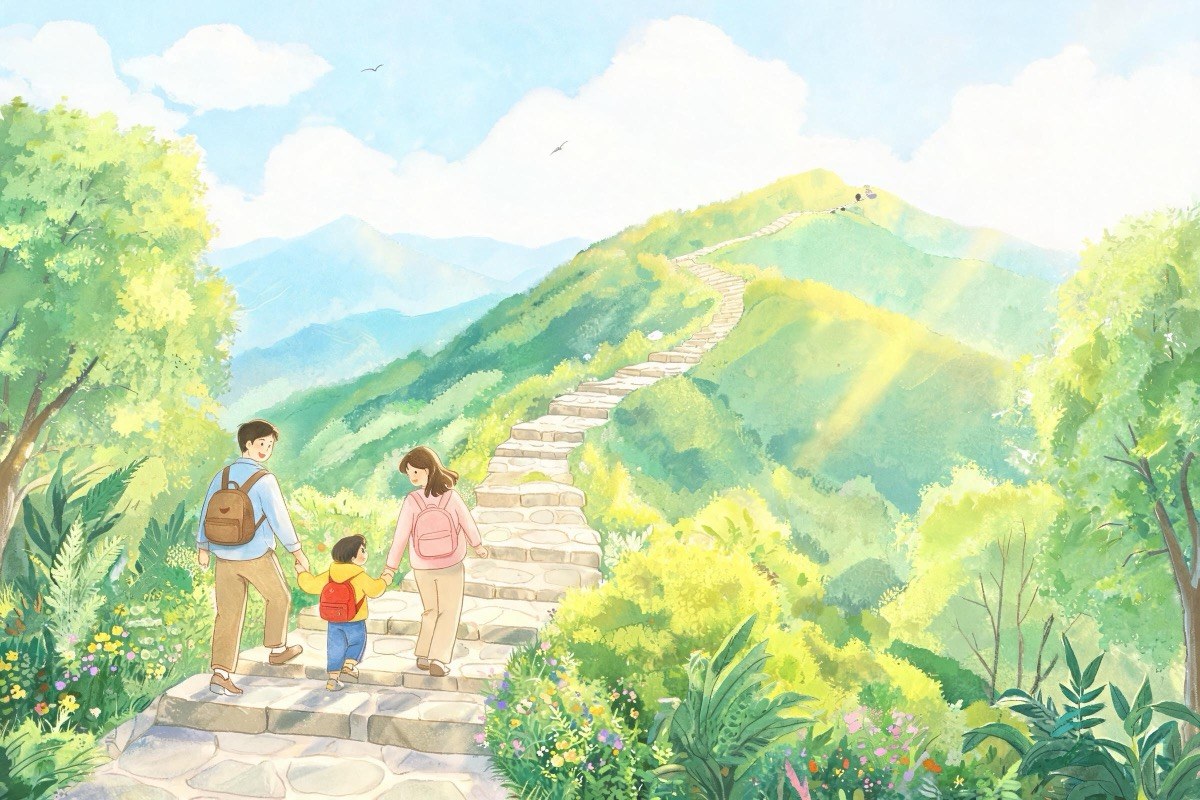
给小学低中年级写爬山诗,不需要复杂技巧,抓住一个原则:句子短、东西实、感情真。所谓东西实,就是题纲里的石阶、野花、山顶。诗把这三样东西安放了,就成功了大半。
先说石阶。石阶是爬山途中最实在的东西,最好用的是数它。一步、两步,孩子的声音数着数着就有节奏了。示例句子:石阶,一级一级,/我踩上去,/山醒了。不要写石阶又长又陡,那是大人的判断。写踩石阶的动作、声音、腿发酸的感觉,读者自己会体会到累和坚持。
再说野花。野花是诗里的小东西,负责颜色和亲近感。给野花一点性格,让它像在对孩子说话:一朵野花从石头缝里探出头,/冲我点点头,/好像在说,慢点,没关系。对话式的句子最适合朗诵,孩子读的时候会自然模仿那个语气。注意野花只写一朵两朵,别写满山,不然小字变成了多字,反而没意思。
最后是山顶。山顶是诗里感情变化的地方,但不要喊山顶真壮观、我胜利了。写站在山顶看到的东西:下面的人变得很小,云离胳膊很近,风吹干了汗。示例句子:站在山顶,/云从我肩膀旁边过,/白得伸手就能摸一朵。刚才爬的那座山,/现在乖乖趴在我脚底下。自豪感自己就出来了,不用说出来。
节奏方面,儿童诗的句子最好三到七个字,一行一口气。重复是好办法:一步、一步重复两遍,朗诵时就有劲儿。拟声词像呼哧、沙沙可以用一点,别堆太多。行末押韵不必强求,读着顺就行。写完自己大声念一遍,每行都能换气、有一行让人想笑,这首诗就适合上台。
How to Write a Children Poem About Mountain Climbing: Placing Three Images One by One
Writing a climbing poem for young elementary students needs no complicated tricks. Hold one rule: short lines, real things, real feelings. The real things are the stone steps, the wildflowers and the mountaintop. Place these three and the poem is already most of the way there.
First, the stone steps. Steps are the most concrete thing in a climb, and counting them works best. One step, two steps, a child counting keeps rhythm all by itself. Try lines like: Stone steps, one by one, / I step on them, / the mountain wakes up. Do not write the steps are long and steep, that is an adult judgment. Write the stepping, the sound, the tired legs, and the listener will feel the effort by itself.
Second, the wildflowers. A wildflower is the small thing in the poem, in charge of color and closeness. Give it a little personality, as if it is talking to the child: A wildflower pokes its head out from the crack in the stone, / nodding at me, / as if saying, slow down, it is fine. Dialog lines are the easiest to recite, and children naturally copy the tone. Write only one or two flowers, not a whole hillside, or the small charm disappears.
Third, the mountaintop. The top is where feelings change, but do not shout how great the top is. Write what is seen from up there: people below become tiny, clouds close to your arms, wind drying the sweat. Try: At the top, / the clouds pass my shoulder, / white enough to grab one. / The mountain I just climbed / now lies quietly under my feet. Pride shows by itself.
For rhythm, keep lines three to seven characters, one breath per line. Repetition helps: repeat one step, one step twice and the recitation gains momentum. Sound words like puff puff can be used lightly, not stacked. Rhyme at line ends need not be strict; if it flows, it works. Read the poem aloud once. If every line leaves room to breathe and one line makes you smile, it is fit for the stage.
完整儿童诗《山路上的收获》与逐段朗诵提示
山路上的收获
石阶,一级一级,
我轻轻地往上走。
第一步,跟风打招呼,
第二步,跟鸟打招呼。
呼哧,呼哧,
小腿有点酸。
在石头上坐一会儿,
再往上走。
一朵野花探出头,
在石阶的缝里。
它冲我点点头,
我冲它点点头。
我们谁也没说话,
可都挺高兴。
越往上,风越大,
吹干了我的汗。
下面的树变小了,
像一堆绿色的扣子。
我终于到山顶啦!
云从我肩膀旁边过,
白得伸手就能摸一朵。
刚才爬的那座山,
乖乖趴在我脚底下。
山路上的收获是什么?
一双酸腿,
一个野花朋友,
还有一整山谷的风。
朗诵提示第一段(石阶部分):开头四行放慢,每个第几步轻轻加重音。呼哧,呼哧读成轻微的喘气声,可以配一个擦汗的动作。在石头上坐一会儿后面停一秒,像真的歇了一下,再接再往上走。
野花部分是整首诗最有趣的地方。它冲我点点头,我冲它点点头要用调皮一点的语气读,眼睛看向观众,好像真的在对一朵花点头。可都挺高兴读轻一点,不要喊,让听众自己去体会那份安静的高兴。
山顶部分:我终于到山顶啦是全诗最响的一行,可以举起胳膊。云从我肩膀旁边过马上回到轻柔,像怕惊动云。最后三行一行一顿,每行之间停半秒,还有一整山谷的风读得慢而稳,收住全诗。
总的原则:全诗不需要夸张的腔调,孩子把句子读清楚、读自然,像讲一件事就够了。节奏来自短句本身,不靠重音硬撑。上台前自己先去爬一次山或爬几层楼梯,腿酸过一遍,读呼哧,呼哧的时候才不假。
A Complete Children Poem With Paragraph-by-Paragraph Recitation Notes
Harvest on the Mountain Path
Stone steps, one by one,
I climb up softly.
Step one, greet the wind,
step two, greet the birds.
Puff puff, puff puff,
my little legs are tired.
Sit on a stone for a while,
then keep climbing up.
A wildflower pokes its head out,
in the crack of the steps.
It nods at me,
I nod back at it.
We said not a word,
yet both of us were happy.
Higher up, the wind grows,
blowing away my sweat.
The trees below turn small,
like a pile of green buttons.
At last I reached the top!
The clouds pass my shoulder,
white enough to grab one.
The mountain I just climbed
lies quietly under my feet.
What did I gain on the mountain path?
A pair of tired legs,
a wildflower friend,
and a whole valley of wind.
Recitation notes for the stone steps part: read the opening four lines slowly, with a light stress on each step line. Puff puff should sound like gentle panting, and a wiping-sweat gesture fits. Pause one second after Sit on a stone for a while, as if truly resting, then continue.
The wildflower part is the liveliest section. Read It nods at me, I nod back at it in a playful tone, eyes toward the audience, as if really nodding at a flower. Read yet both of us were happy softly, without shouting, and let the listeners feel the quiet joy themselves.
The mountaintop part: At last I reached the top is the loudest line, arms may rise. The clouds pass my shoulder returns to softness, as if afraid to startle the clouds. Read the last three lines one by one, half a second between each, and end a whole valley of wind slowly and firmly.
General rule: no exaggerated intonation is needed. The child should read the lines clearly and naturally, like telling what happened. The rhythm comes from the short lines themselves, not from forced stress. Before going on stage, climb a hill or a few flights of stairs once, feel the tired legs, and the puff puff will not sound fake.
小提示:上面此文档内容仅展示完整文档里的部分内容, 若需要下载完整文档请 点击免费下载完整文档 。