文章内容
登山里怎么放手:给孩子三个可以自己走的台阶
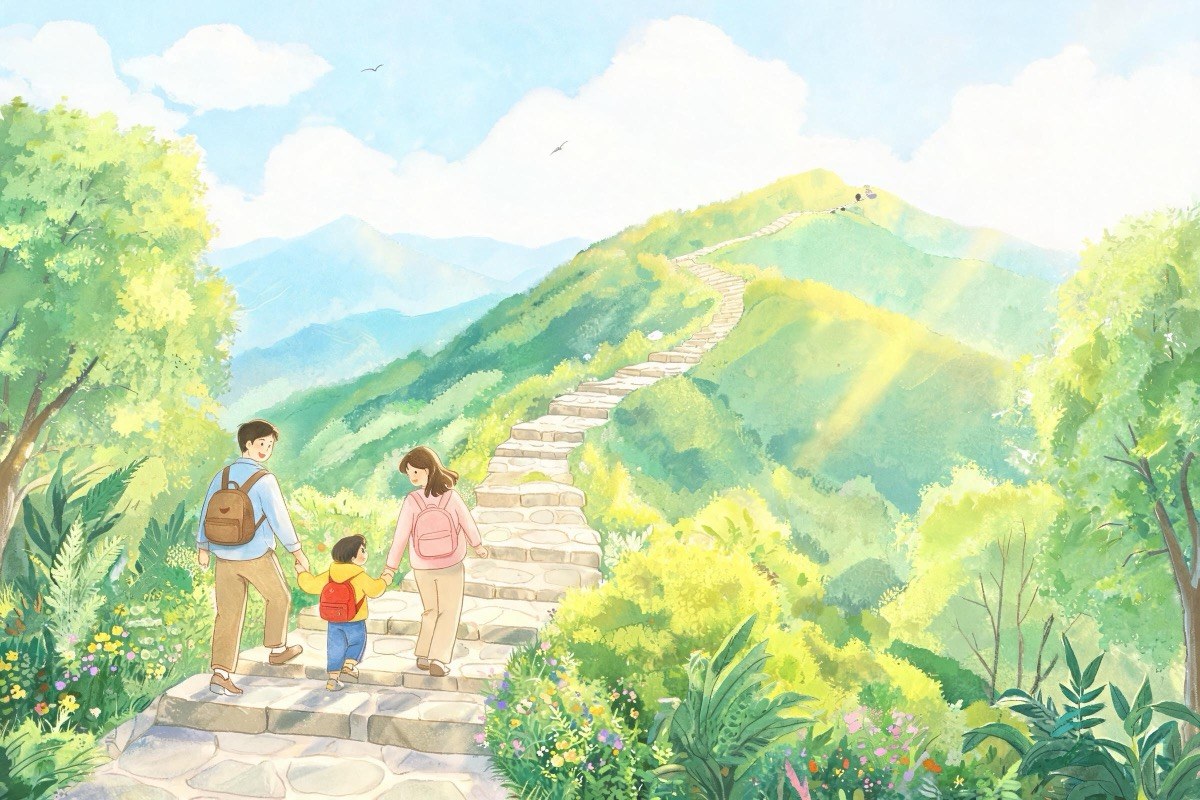
孩子爬到一半喊抱,多数家长的难处不是累,是忍。放手不是一句口号,可以拆成三个台阶来做。第一个台阶:把剩下的路切成小段。别对孩子说还有两公里,他听不懂两公里是什么。指着前面那棵歪脖子树说走到那儿歇脚,到了再指下一块石头。孩子的路是一段一段走完的,每到一个点就数给他看,走到第三棵树的时侯他自己会要求再往前。第二个台阶:家长挪到孩子身后。出发时大人习惯走前面带路,喊抱的时侯起作用的办法是退到他后面,让他领路。孩子在前面时注意力在找路上,没空喊累;大人在后面只需看脚下安全,不用回头哄。位置一变,角色就变了,领路的孩子会提醒大人小心石头。第三个台阶:把登顶那一下留给孩子。快到顶时大人别抢那几步,站在旁边让孩子先迈上最后一块石头。他登顶后看见什么、说什么,都让他自己完成。家长要忍住的是替他欢呼、替他拍照这两件事,让他自己找地方站、自己看远处。三个台阶背后是一个判断:孩子要的不是被抱到山顶,是确认走不动时有人陪。忍住不抱的时侯蹲下来陪他坐三十秒,比抱起来走一百米更管用。教育反思不在文章里写道理,在山路上的每一次停顿里已经完成了。写这类随笔把这三个台阶按顺序记下来,就是现成的骨架。补一句给家长的提醒:三个台阶别同时上,第一次登山只用第一个,把小段切好就赢了;第二次再加退到身后,第三次再留登顶。一次改一个动作,孩子和大人都适应得了。做完三次练习再回头看,孩子喊抱的次数会一次比一次少,山路上的对话也会从抱我变成看我。
How to Let Go on a Hike: Three Steps That Help a Child Walk Alone
When a child halfway up a mountain cries to be carried, most parents struggle not with fatigue but with holding back. Letting go is not a slogan; it can be built in three steps. Step one: cut the remaining path into short stretches. Do not tell a child two kilometers remain; he cannot hear what two kilometers means. Point at the crooked tree ahead and say we rest there, then point at the next rock when you arrive. A child walks the road stretch by stretch. Count each point reached, and by the third tree he will ask to go on. Step two: the parent moves behind the child. Adults lead at the start. The trick when crying starts is to fall back and let him lead. A child in front focuses on the path and has no time to complain; the adult behind only watches footing, no turning back to coax. Change the position and the roles change. The leading child warns the adult about rocks. Step three: leave the summit moment to the child. Near the top, do not take the last few strides. Stand aside and let him step onto the final rock first. What he sees and says up there is his to finish. The parent must resist cheering for him and photographing him. Let him find his own spot and look at the distance himself. Behind the three steps sits one judgment: the child does not want to be carried to the top; he wants confirmation that someone stays when he cannot go on. Squatting with him for thirty seconds beats carrying him a hundred meters. The educational reflection is not written as a lesson; it already happened in every pause on the trail. Record the three steps in order and the essay writes its own skeleton. One reminder for parents: do not run all three steps at once. On the first hike use only step one and cutting the path well already wins. Add falling behind on the second hike, and leave the summit moment on the third. Change one habit at a time, and both child and adult can adjust. After three rounds of practice, look back: the times the child cries to be carried drop each round.
一次真实登山的复盘:忍住没抱的那二十分钟
假设去年秋天陪六岁的女儿爬城郊的小山,半山腰她站住,两只手举起来要抱。当时背包里还有半瓶水没给她,她爸先走过去了,路上只剩我们两个人。我蹲下来,没抱,说坐三十秒,数到三十就起来。她坐在石阶上抠苔藓,数到二十自己站起来了。这段后来在随笔里写了三行:她伸手、我蹲下、她抠苔藓。没有写我爱她之类的话,动作够了。再往上二十分钟是最难的。她每走五六分钟停一次,每次停我都问要不要喝水,她每次都说不用。现在想,那二十分钟里她不需要水,需要的是停下来也没人催。她爸在前面十米远,没回头,这个距离刚好,回头一次她就会喊累。最后十步她忽然跑起来,踩上观景台的平台,转过身喊我快来看。我上去时她已经趴在栏杆边看下面的房子,说那些车都是玩具。登顶的第一句话不是我真棒,是那些车都是玩具。这句比任何感悟都值钱,孩子的山顶和大人的山顶不是一个东西。事后反思有两层。第一层:忍住不抱靠的不是狠心,是提前想好替代动作,蹲下数三十秒是现成的,临时决定才会心软。第二层:她爸和我一前一后的站位帮了大忙,一个人负责不催,一个人负责不看,孩子反而自己走完了。写陪孩子爬到山顶之后的随笔,就按这个顺序写:她伸手、我蹲下、她自己走、她说车是玩具。反思放在最后一段,两句收住,多了就假。下山时她爸问她下次还来不来,她说不来,太累了。这个结尾也照实写,不用圆回来,孩子当时的真实感受比励志重要。后来她把那次登山讲给同学听,讲的也是车是玩具,没讲坚持。
A Real Hike Retold: The Twenty Minutes I Did Not Carry Her
Suppose last autumn I accompanied my six-year-old daughter up a small hill outside town. Halfway up she stopped and raised both arms to be carried. The backpack still had half a bottle of water she had not had. Her father had walked ahead, so only the two of us were left on the trail. I squatted down, did not pick her up, and said sit for thirty seconds, we get up at thirty. She sat on the step picking at moss, and at twenty she stood up by herself. The essay later carried three lines: she reached out, I squatted, she picked moss. No words about loving her. The actions were enough. The next twenty minutes were the hardest. She paused every five or six minutes, and each time I asked if she wanted water, and each time she said no. Thinking back, in those twenty minutes she did not need water; she needed proof that stopping would not bring a push. Her father stayed ten meters ahead and never looked back. That distance was right. One look back and she would have cried tired. In the last ten steps she suddenly ran up onto the lookout platform and turned around calling me to see. When I got up she was already at the railing watching the houses below, saying all those cars are toys. Her first sentence at the summit was not I am great. It was those cars are toys. That line is worth more than any lesson. A child summit and an adult summit are not the same place. The reflection has two layers. First: holding back did not take hardness of heart. It took a substitute action decided in advance. Squat and count to thirty was ready-made; only improvised decisions turn soft. Second: our one-ahead-one-behind spacing helped greatly. One person did not rush, the other did not look, and the child walked it alone. To write the essay about reaching the top with your child, keep this order: she reached out, I squatted, she walked, she said the cars are toys. Put the reflection in the last paragraph, two sentences, and stop. More than that rings false. On the way down her father asked if she would come again next time, and she said no, too tired. Write that ending honestly too, without smoothing it over. A child real feeling at that moment matters more than inspiration. Later she told classmates about that hike, and what she told them was the cars are toys, not perseverance.
小提示:上面此文档内容仅展示完整文档里的部分内容, 若需要下载完整文档请 点击免费下载完整文档 。