文章内容
家庭登山随笔怎么写:把三个素材串成一条温度线
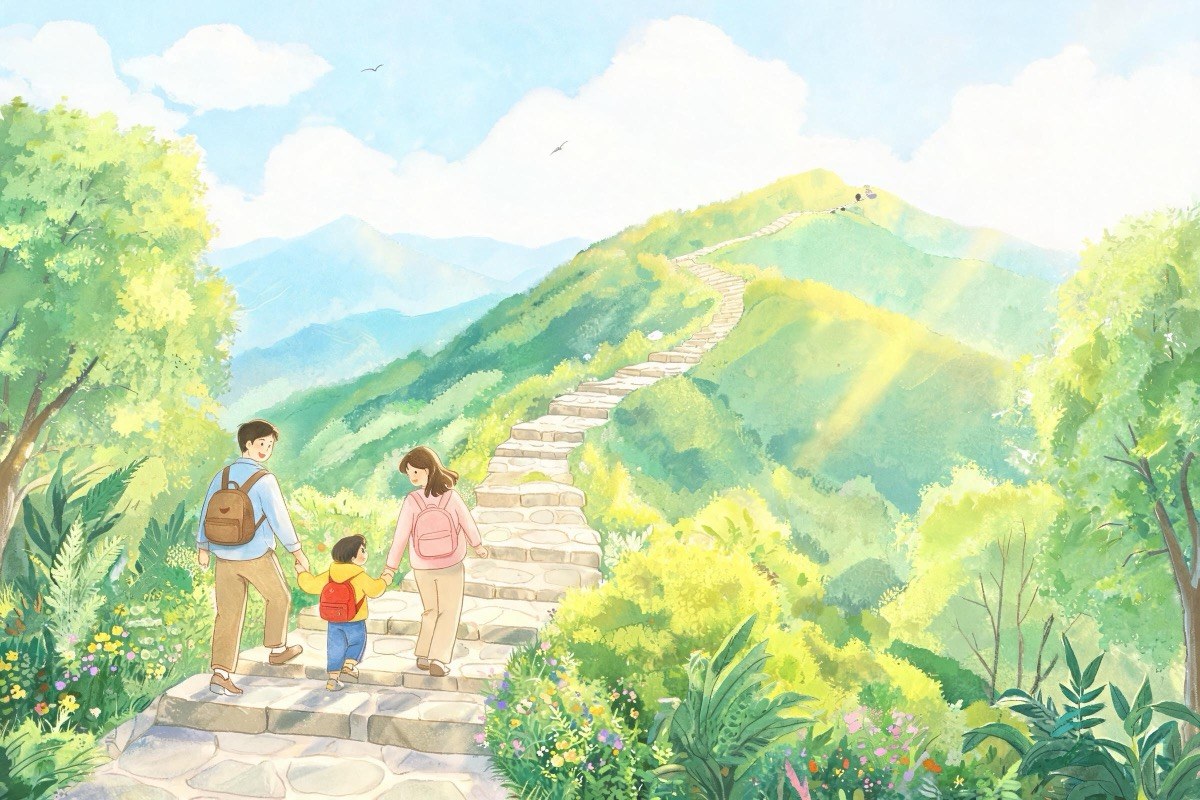
给孩子看作文本时,家长常卡在随笔上:记事会记,记完像流水账。写全家登山这类随笔,办法是先定下三个素材,再把它们串成一条线。第一个素材是出发前整理背包。别写准备了零食和水,写具体的那一次:孩子把两包饼干塞进自己的小背包,拉链拉不上,爸爸蹲下来帮他把最重的那包换到自己肩上。动作要具体,谁做了什么,一句话就能立住。第二个素材是山路上互相等待。山路总有快慢,写谁落在后面、前面的人怎么等。比如妈妈走在最后,每隔一段就停下数人数;孩子跑到前面又倒回来,拉着爷爷走慢一点。等待的动作比累不累三个字有用得多。第三个素材放下山。大人下山时膝盖打颤,孩子却回头说一句下次还来。这句原话要照抄,不要改成孩子懂得了坚持的道理。三个素材定好,随笔的骨架就有了,剩下的工作是串联。串联按时间线走,从家门口写到山门口,中间不跳步。每个素材之间加一句过渡,过渡也写实事:背包换肩、水壶见了底、石阶从土路变成水泥台阶,都是过渡。结尾停在最后那个画面上,比如孩子坐在台阶上翻空水壶,说明天真的要去,就收住。家长写这类文章还有一个便利:你手里有照片。翻一遍手机相册,挑三张对应三个素材的照片,照着照片补细节,照片里背包的颜色、谁的手牵着谁的手,都是现成的材料,比回忆可靠。写完后读一遍,凡是出现幸福、陪伴、亲情这类词,看看前后有没有具体动作撑着。没有动作撑着的,把词删掉,动作留下。随笔的温度来自动作和原话,不来自形容词。家长平时可以准备一个小本子,登山当天随手记两三句孩子说过的原话,写随笔时直接引用,比事后回忆准得多。
How to Write a Family Hiking Essay: Stringing Three Moments into a Warm Line
When parents read their childrens composition books, the essay is often the hard part: they can record events, but the record reads like a running account. For a family hiking essay, the method is to fix three moments first, then string them into one line. The first moment is packing the backpack before departure. Do not write that snacks and water were prepared; write that specific time: the child stuffed two packs of biscuits into a small backpack, the zipper would not close, and the father squatted down to move the heaviest pack onto his own shoulder. The action must be concrete. Who did what, one sentence, and the scene stands. The second moment is waiting for each other on the trail. Trails always have fast and slow walkers. Write who fell behind and how the ones ahead waited. The mother walked at the rear and stopped every stretch to count heads; the child ran ahead then came back to slow grandpa down. Actions of waiting beat the three words so tired by a mile. The third moment goes on the way down. The adults knees shook downhill, yet the child turned back and said lets come again next time. Copy that line word for word. Do not turn it into the child learned the lesson of perseverance. With three moments fixed, the skeleton is done, and the rest is stitching. Stitch along the timeline, from the front door to the trailhead, no jumps in between. Put one bridging sentence between moments, and make the bridge factual too: swapping the pack between shoulders, the water bottle running empty, dirt path turning into concrete steps. End on the last image: the child sitting on a step shaking out the empty bottle, saying tomorrow we really go. Stop there. Parents have one advantage with this kind of writing: the photos. Scroll through the phone album, pick three shots matching the three moments, and fill details from them. The color of the backpack, whose hand held whose hand, all ready-made and more reliable than memory. After writing, read it once. Wherever words like happiness, companionship, or family love appear, check whether a concrete action holds them up. If not, delete the word and keep the action. The warmth of an essay comes from actions and quoted speech, not adjectives. Parents can keep a small notebook handy and jot down two or three lines the child actually said on the hiking day, then quote them directly when writing the essay, far more accurate than recalling afterward.
一篇600字登山随笔示范:《背包、等待和那句下次还来》逐段点评
假设有一篇家长写的随笔,题目叫《背包、等待和那句下次还来》,六百字上下。第一段写出发:周六早上六点五十,客厅里三个背包排成一排,最小的那个是女儿的,她往里面塞了一整包薯片,又摸出半块橡皮放进去,说是路上玩。点评:开头没有写今天我们去爬山,直接进客厅,物品清单式的写法把出发写得看得见,半块橡皮这种小东西是全文最值钱的一笔,孩子的小心思不用解释。第二段写上山:女儿一开始冲在最前,二十分钟后落在最后,她爸倒退着走,哄她数台阶,数到一百就歇。点评:冲在最前和落在最后形成对照,倒退着走这个动作写父亲,比写父亲耐心有效。数到一百就歇是给孩子的游戏,也是给读者的节奏,文章跟着台阶走,不赶。第三段写半山腰:妈妈把水壶递过去,女儿喝一口就还回来,说留给下山喝。点评:留水壶这个细节对应结尾,前文埋一笔,后文才有呼应,随笔的暗线常常靠这种小物件。第四段写下山:女儿的膝盖先软,她爸蹲下背她,走了半段她下来自己走,边走边说下次还来。点评:背了半段就下来,这一处克制得好,要是背到山脚,文章就变成歌颂了;下次还来是原话,放在动作后面,读者自己会热。第五段收尾:回家称体重,女儿背包里那包薯片原封没动,她说明天分给同桌。点评:结尾不总结,落在没吃的薯片上,和开头的塞薯片接上,全文闭环。家长对照自己写的登山文章,检查三件事:开头有没有具体物品,中段有没有一个来回变化的动作,结尾有没有回收开头的物件。三样都有,六百字的随笔就立得住;缺哪样,补哪样。
A 600-Word Hiking Essay Sample: Paragraph-by-Paragraph Notes
Suppose a parent writes an essay titled The Backpack, the Wait, and That Line About Coming Again, around six hundred words. Paragraph one is departure: 6:50 Saturday morning, three backpacks lined up in the living room, the smallest one belonging to the daughter. She stuffed a whole bag of chips inside, then slipped in half an eraser, saying it was for the road. Note: the opening does not say today we went hiking; it walks straight into the living room. A list-of-items opening makes departure visible, and that half eraser is the most valuable touch in the piece. A child small whim needs no explanation. Paragraph two is going up: the daughter led at first, then trailed last after twenty minutes. Her father walked backwards, coaxing her to count steps, resting at every hundred. Note: leading then trailing forms a contrast; walking backwards portrays the father better than calling him patient. Counting to one hundred is a game for the child and a rhythm for the reader. The essay climbs with the steps, never rushing. Paragraph three is the mid-mountain rest: the mother hands over the bottle, the daughter takes one sip and gives it back, saying save it for the way down. Note: saving the bottle answers the ending. Bury a small object early and the later echo lands; the hidden thread of an essay often runs on such objects. Paragraph four is the descent: the daughters knees gave out first, her father squatted to carry her, and after half a stretch she got down and walked, saying lets come again next time. Note: carried for only half the way is well restrained. Carried to the foot of the mountain, the piece turns into a hymn. The quoted line sits after the action, so the reader feels the warmth alone. Paragraph five closes: back home on the scale, the bag of chips in her pack was unopened. She said she would share it with her deskmate tomorrow. Note: no summary at the end, it lands on the uneaten chips and closes the loop with the chips stuffed in at the start. Parents checking their own hiking essays should look for three things: a concrete object at the opening, one action in the middle that reverses, and an ending that calls back the opening object. All three and a six-hundred-word essay stands. Missing one, add that one.
小提示:上面此文档内容仅展示完整文档里的部分内容, 若需要下载完整文档请 点击免费下载完整文档 。