文章内容
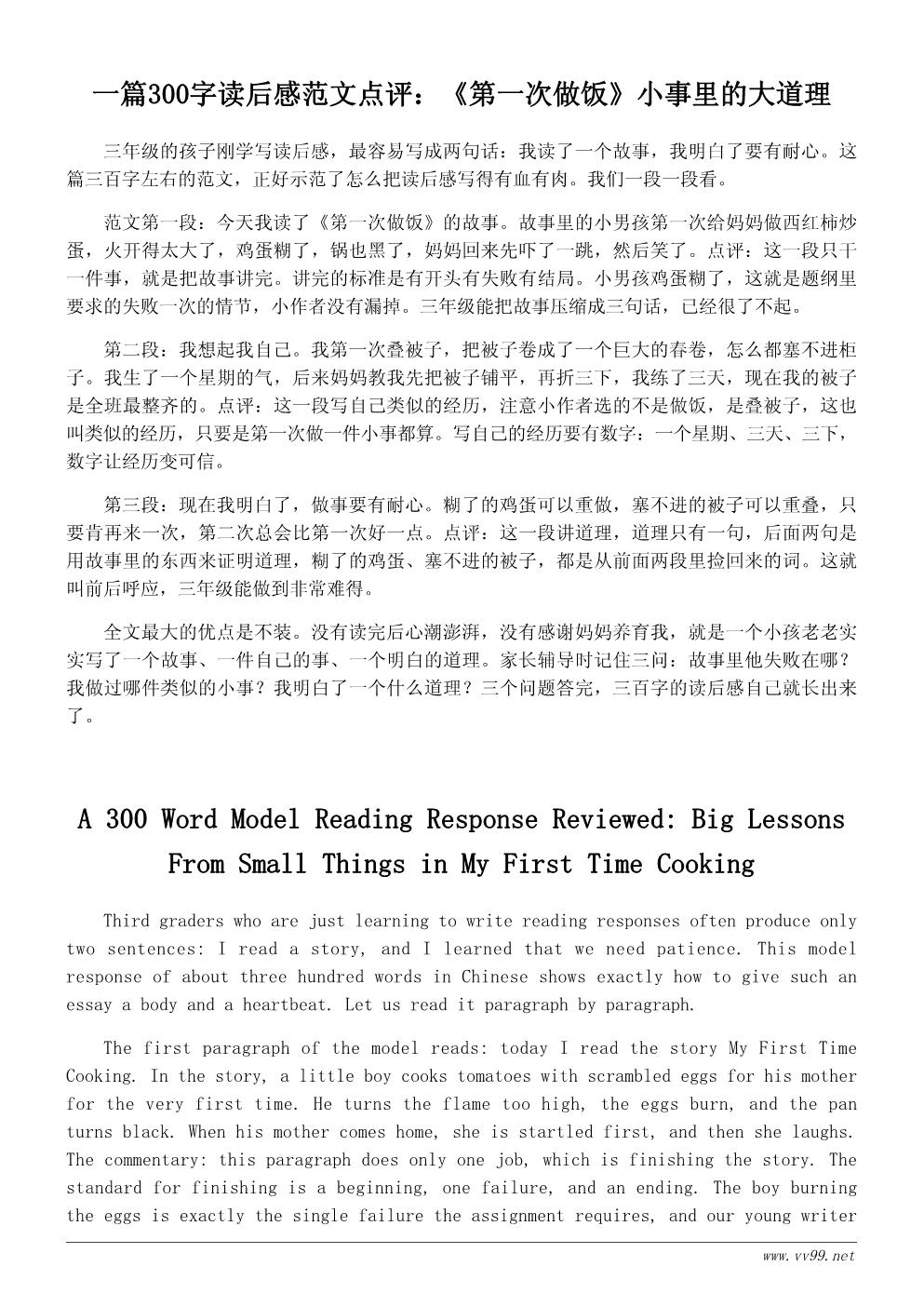
一篇300字读后感范文点评:《第一次做饭》小事里的大道理
三年级的孩子刚学写读后感,最容易写成两句话:我读了一个故事,我明白了要有耐心。这篇三百字左右的范文,正好示范了怎么把读后感写得有血有肉。我们一段一段看。
范文第一段:今天我读了《第一次做饭》的故事。故事里的小男孩第一次给妈妈做西红柿炒蛋,火开得太大了,鸡蛋糊了,锅也黑了,妈妈回来先吓了一跳,然后笑了。点评:这一段只干一件事,就是把故事讲完。讲完的标准是有开头有失败有结局。小男孩鸡蛋糊了,这就是题纲里要求的失败一次的情节,小作者没有漏掉。三年级能把故事压缩成三句话,已经很了不起。
第二段:我想起我自己。我第一次叠被子,把被子卷成了一个巨大的春卷,怎么都塞不进柜子。我生了一个星期的气,后来妈妈教我先把被子铺平,再折三下,我练了三天,现在我的被子是全班最整齐的。点评:这一段写自己类似的经历,注意小作者选的不是做饭,是叠被子,这也叫类似的经历,只要是第一次做一件小事都算。写自己的经历要有数字:一个星期、三天、三下,数字让经历变可信。
第三段:现在我明白了,做事要有耐心。糊了的鸡蛋可以重做,塞不进的被子可以重叠,只要肯再来一次,第二次总会比第一次好一点。点评:这一段讲道理,道理只有一句,后面两句是用故事里的东西来证明道理,糊了的鸡蛋、塞不进的被子,都是从前面两段里捡回来的词。这就叫前后呼应,三年级能做到非常难得。
全文最大的优点是不装。没有读完后心潮澎湃,没有感谢妈妈养育我,就是一个小孩老老实实写了一个故事、一件自己的事、一个明白的道理。家长辅导时记住三问:故事里他失败在哪?我做过哪件类似的小事?我明白了一个什么道理?三个问题答完,三百字的读后感自己就长出来了。
A 300 Word Model Reading Response Reviewed: Big Lessons From Small Things in My First Time Cooking
Third graders who are just learning to write reading responses often produce only two sentences: I read a story, and I learned that we need patience. This model response of about three hundred words in Chinese shows exactly how to give such an essay a body and a heartbeat. Let us read it paragraph by paragraph.
The first paragraph of the model reads: today I read the story My First Time Cooking. In the story, a little boy cooks tomatoes with scrambled eggs for his mother for the very first time. He turns the flame too high, the eggs burn, and the pan turns black. When his mother comes home, she is startled first, and then she laughs. The commentary: this paragraph does only one job, which is finishing the story. The standard for finishing is a beginning, one failure, and an ending. The boy burning the eggs is exactly the single failure the assignment requires, and our young writer did not miss it. For a third grader, compressing a whole story into three sentences is already impressive.
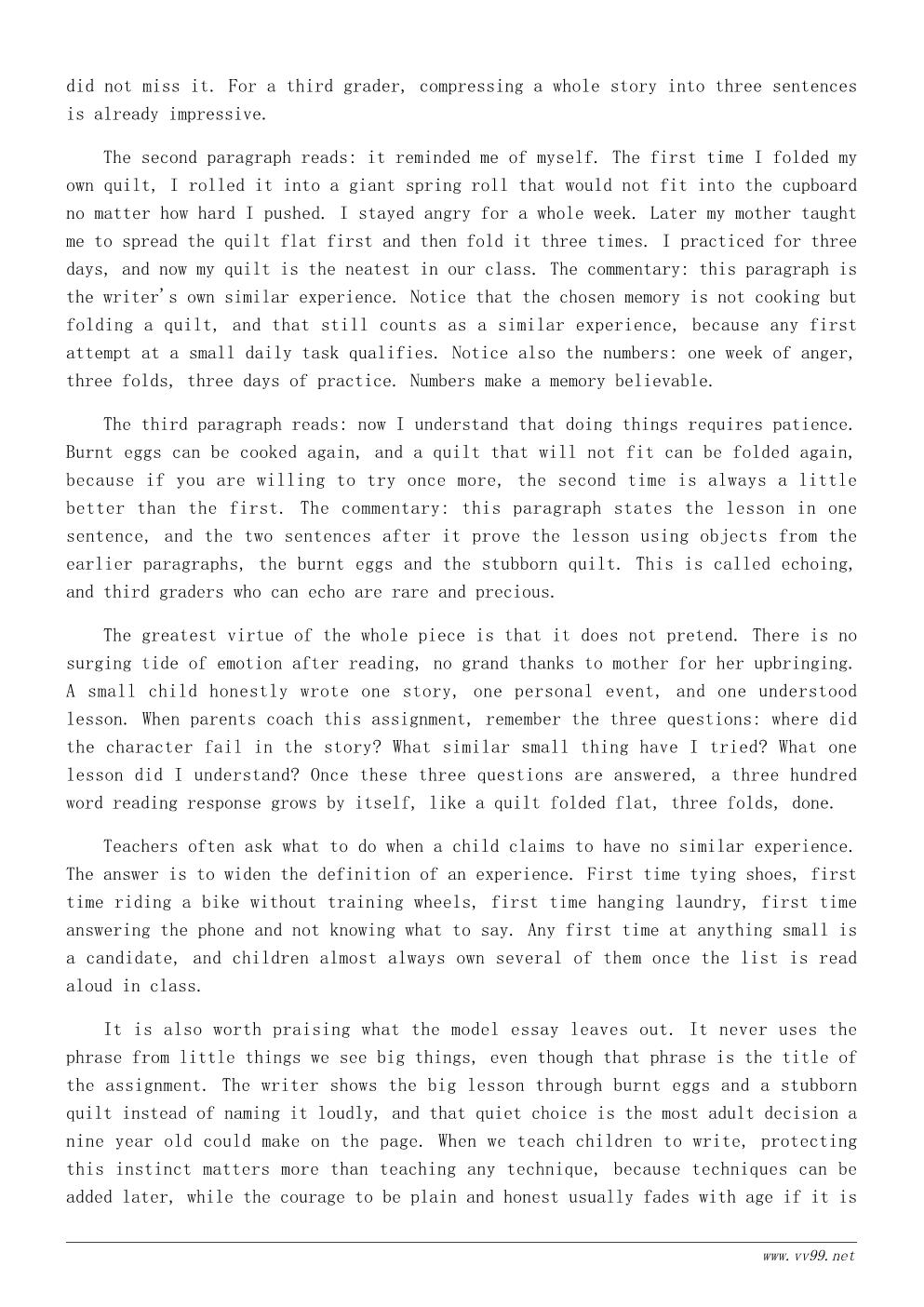
The second paragraph reads: it reminded me of myself. The first time I folded my own quilt, I rolled it into a giant spring roll that would not fit into the cupboard no matter how hard I pushed. I stayed angry for a whole week. Later my mother taught me to spread the quilt flat first and then fold it three times. I practiced for three days, and now my quilt is the neatest in our class. The commentary: this paragraph is the writer's own similar experience. Notice that the chosen memory is not cooking but folding a quilt, and that still counts as a similar experience, because any first attempt at a small daily task qualifies. Notice also the numbers: one week of anger, three folds, three days of practice. Numbers make a memory believable.
The third paragraph reads: now I understand that doing things requires patience. Burnt eggs can be cooked again, and a quilt that will not fit can be folded again, because if you are willing to try once more, the second time is always a little better than the first. The commentary: this paragraph states the lesson in one sentence, and the two sentences after it prove the lesson using objects from the earlier paragraphs, the burnt eggs and the stubborn quilt. This is called echoing, and third graders who can echo are rare and precious.
The greatest virtue of the whole piece is that it does not pretend. There is no surging tide of emotion after reading, no grand thanks to mother for her upbringing. A small child honestly wrote one story, one personal event, and one understood lesson. When parents coach this assignment, remember the three questions: where did the character fail in the story? What similar small thing have I tried? What one lesson did I understand? Once these three questions are answered, a three hundred word reading response grows by itself, like a quilt folded flat, three folds, done.
Teachers often ask what to do when a child claims to have no similar experience. The answer is to widen the definition of an experience. First time tying shoes, first time riding a bike without training wheels, first time hanging laundry, first time answering the phone and not knowing what to say. Any first time at anything small is a candidate, and children almost always own several of them once the list is read aloud in class.
It is also worth praising what the model essay leaves out. It never uses the phrase from little things we see big things, even though that phrase is the title of the assignment. The writer shows the big lesson through burnt eggs and a stubborn quilt instead of naming it loudly, and that quiet choice is the most adult decision a nine year old could make on the page. When we teach children to write, protecting this instinct matters more than teaching any technique, because techniques can be added later, while the courage to be plain and honest usually fades with age if it is not cherished early.
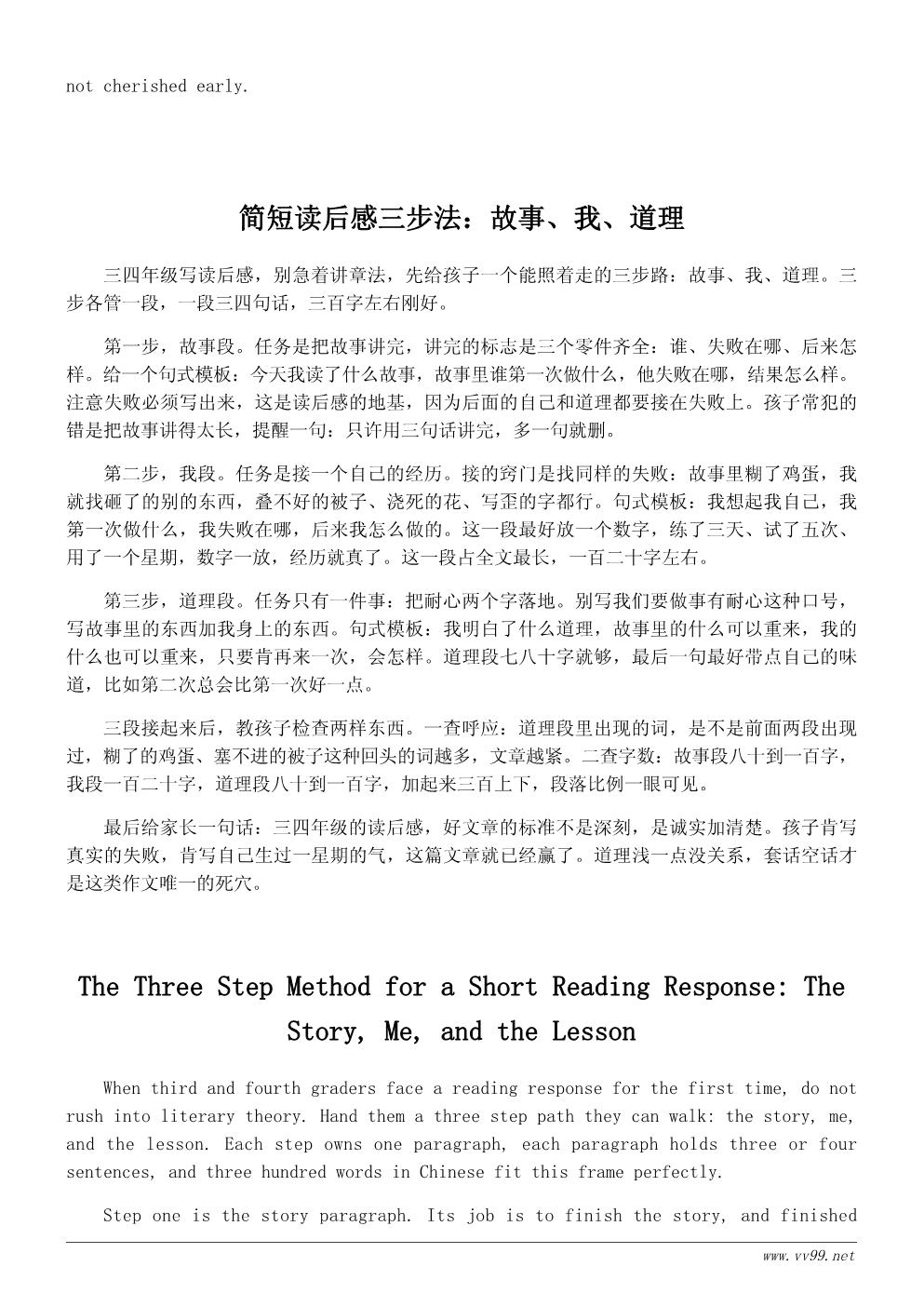
简短读后感三步法:故事、我、道理
三四年级写读后感,别急着讲章法,先给孩子一个能照着走的三步路:故事、我、道理。三步各管一段,一段三四句话,三百字左右刚好。
第一步,故事段。任务是把故事讲完,讲完的标志是三个零件齐全:谁、失败在哪、后来怎样。给一个句式模板:今天我读了什么故事,故事里谁第一次做什么,他失败在哪,结果怎么样。注意失败必须写出来,这是读后感的地基,因为后面的自己和道理都要接在失败上。孩子常犯的错是把故事讲得太长,提醒一句:只许用三句话讲完,多一句就删。
第二步,我段。任务是接一个自己的经历。接的窍门是找同样的失败:故事里糊了鸡蛋,我就找砸了的别的东西,叠不好的被子、浇死的花、写歪的字都行。句式模板:我想起我自己,我第一次做什么,我失败在哪,后来我怎么做的。这一段最好放一个数字,练了三天、试了五次、用了一个星期,数字一放,经历就真了。这一段占全文最长,一百二十字左右。
第三步,道理段。任务只有一件事:把耐心两个字落地。别写我们要做事有耐心这种口号,写故事里的东西加我身上的东西。句式模板:我明白了什么道理,故事里的什么可以重来,我的什么也可以重来,只要肯再来一次,会怎样。道理段七八十字就够,最后一句最好带点自己的味道,比如第二次总会比第一次好一点。
三段接起来后,教孩子检查两样东西。一查呼应:道理段里出现的词,是不是前面两段出现过,糊了的鸡蛋、塞不进的被子这种回头的词越多,文章越紧。二查字数:故事段八十到一百字,我段一百二十字,道理段八十到一百字,加起来三百上下,段落比例一眼可见。
最后给家长一句话:三四年级的读后感,好文章的标准不是深刻,是诚实加清楚。孩子肯写真实的失败,肯写自己生过一星期的气,这篇文章就已经赢了。道理浅一点没关系,套话空话才是这类作文唯一的死穴。
The Three Step Method for a Short Reading Response: The Story, Me, and the Lesson
When third and fourth graders face a reading response for the first time, do not rush into literary theory. Hand them a three step path they can walk: the story, me, and the lesson. Each step owns one paragraph, each paragraph holds three or four sentences, and three hundred words in Chinese fit this frame perfectly.
Step one is the story paragraph. Its job is to finish the story, and finished means three parts are present: who, where the failure happened, and how it ended. Here is a sentence template: today I read a story about whom, who tried what for the first time, where the character failed, and what happened in the end. The failure must be written down, because it is the foundation of the whole essay, and both the me paragraph and the lesson paragraph will be attached to it later. A common mistake is telling the story too long, so give the child one rule: the story must be finished in three sentences, and every extra sentence gets deleted.
Step two is the me paragraph. Its job is to attach one personal experience. The trick is matching the same kind of failure: if the story burned the eggs, the child should find something else they botched, a badly folded quilt, a flower watered to death, handwriting that went crooked. The template reads: it reminded me of myself, the first time I did what, where I failed, and what I did afterward. This paragraph should contain one number, three days of practice, five attempts, one whole week of being upset. Once a number appears, the memory becomes real. This paragraph should be the longest, around one hundred and twenty words in Chinese.
Step three is the lesson paragraph. It has exactly one job: to land the word patience on the ground. Do not write slogans like we should all be patient. Write objects from the story plus objects from your own life. The template reads: I understood that what lesson, what in the story can be tried again, what in my life can also be tried again, and if I am willing to try once more, what will happen. Seventy to eighty words are enough here, and the final sentence should carry the writer's own flavor, something like the second time is always a little better than the first.
After the three paragraphs are joined, teach the child to check two things. Check one is echoing: do the words in the lesson paragraph appear earlier in the essay? The burnt eggs and the stubborn quilt are return tickets, and the more return tickets an essay collects, the tighter it holds together. Check two is the word budget: eighty to one hundred words for the story, about one hundred and twenty for the me paragraph, and eighty to one hundred for the lesson, which totals around three hundred, and the proportions are visible at a glance.
One final word for parents. For third and fourth grade reading responses, the standard of a good essay is not depth. The standard is honesty plus clarity. When a child is willing to write a real failure and admit they stayed angry for a week, the essay has already won. A shallow lesson is fine. Empty cliches are the only fatal wound this genre has, and an honest child with three clear paragraphs will never meet that wound on the page.
One practical note about grading. When a teacher reads three hundred words from a third grader, she is not counting adjectives. She is looking for three small signals: did the child finish the story including the failure, did the child name one real event from their own life, and did the child state one lesson in their own plain words. A response that carries these three signals earns a passing grade even without a single beautiful sentence, and a response decorated with flowery phrases but missing all three earns nothing. Telling children this rule before they write takes away most of their fear, because honesty is much easier to produce than decoration.
小提示:上面此文档内容仅展示完整文档里的部分内容, 若需要下载完整文档请 点击免费下载完整文档 。