文章内容
第一次独自做饭的日记怎么写:从慌张到从容的三步法
六年级的孩子写第一次独自做饭的日记,最难得的不是把饭做熟了,而是把心里的变化写出来:开头手忙脚乱,结尾从容有序。老师把这种变化叫作成长线。成长线看不见摸不着,怎么落到纸上?答案是挑三个环节,让变化藏在环节里。
第一个环节是打开冰箱。这是慌张的起点。冰箱里有什么,孩子看见的和会做的之间隔着一条鸿沟:看见鸡蛋会想到炒鸡蛋,看见半根胡萝卜就卡住了。写这个环节,要写眼睛在看什么、心里在盘算什么。最后选了最保险的西红柿炒蛋,这个选择本身就是心理描写,比写我很紧张高级得多。
第二个环节是炒菜,这是全文的高潮。题纲里说火太大了,这个细节非常好:油刚下锅就冒烟,菜倒进去刺啦一声,油点蹦到手背上,孩子吓得往后退半步,又舍不得这锅菜,硬着头皮扑上去翻炒。慌乱、心疼菜、硬撑,三种心情挤在一口锅里,这就是真实的厨房。写的时候记住一个窍门:先写身体反应,再写心里想法。手先缩回来,脑子后想明白,顺序对了,读者就信了。
第三个环节是洗碗,很多人会跳过,其实它才是从容的证据。饭桌上那十分钟已经让孩子冷静下来,洗碗时他发现自己会调节水温了,会先用洗洁精泡着油腻的盘子再去擦,省了不少力气。这些小技巧不是谁教的,是刚才那顿午饭教的。把这种自己悟出来的进步写两笔,成长线就收住了。
家长辅导时抓两件事。第一,问孩子三个问题:打开冰箱时你最怕选错什么?炒菜时最惊险的一下是什么?洗完碗你发现自己比开始时多会了什么?答案就是三个环节的骨架。第二,提醒孩子写反思不要写口号。我学会了独立这种句子删掉,换成今天才知道炒菜前要把锅烧干,水珠落进热油会炸开,这样的句子才叫反思。
最后看结构:开头两三句交代为什么独自做饭,中间三个环节各一段,结尾一段写变化。五百字左右,段落清清楚楚。慌张到从容这条线,不用喊出来,读者跟着三个环节走一遍,自己就看见了。
Writing a Diary About Cooking Alone for the First Time: A Three Step Method From Panic to Calm
When a sixth grader writes a diary about cooking a whole meal alone for the first time, the hardest part is not describing how the food turned out. The hardest part is describing how the writer himself changed: frantic at the beginning, composed at the end. Teachers call this hidden arc a growth line, and the question every child faces is how to put an invisible line onto paper. The answer is to choose three stages of the meal and hide the change inside those stages.
The first stage is opening the refrigerator. This is where the panic begins. There is a wide gap between what a child sees inside the fridge and what the child knows how to cook. Eggs suggest scrambled eggs instantly, but half a carrot simply sits there, refusing to become a dish. When writing this stage, describe what the eyes are scanning and what the mind is calculating. Choosing the safest possible dish, tomatoes with scrambled eggs, is itself a form of psychological description, and it works far better than writing the words I was very nervous.
The second stage is stir frying, the climax of the whole diary. The outline mentions that the flame was too high, and that is an excellent detail. The oil starts smoking the moment it hits the pan, the greens scream when they slide in, hot droplets jump onto the back of the child's hand, and the child steps half a step backward out of pure reflex, then feels too sorry for the vegetables to give up and dives back in to stir. Panic, protectiveness toward the food, and stubborn determination all crowd into one pan, and that is exactly what a real kitchen feels like from the inside. Here is a trick worth memorizing: write the body's reaction first and the mind's explanation second. The hand pulls back before the brain understands why, and if the child writes them in that order, the reader will believe every word.
The third stage is washing the dishes. Many students skip this stage, yet it is the true proof of growing calm. The ten quiet minutes at the dinner table have already cooled the child down, and now at the sink the child discovers practical skills: how to find the right water temperature, how to soak a greasy plate in detergent before scrubbing, how to stack the dishes so the whole pile takes five minutes instead of fifteen. Nobody taught these tricks. The lunch itself taught them. Writing two or three sentences about lessons discovered alone is how a growth line is tied into a neat knot.
Parents should focus on two jobs when helping with this assignment. First, ask three questions. When you opened the fridge, what choice were you most afraid of making? What was the most frightening second during the stir fry? After washing the dishes, what could you do that you could not do at the start? The answers form the skeleton of the three stages. Second, teach the child the difference between reflection and slogans. Delete sentences like I have learned to be independent. Replace them with observations like: today I discovered that a wet pan makes hot oil explode, so the pan must be dried before the oil goes in. That kind of sentence is real reflection, earned from lived experience.
Finally, check the structure. Two or three opening sentences explain why the child had to cook alone. Three middle paragraphs cover the three stages. One closing paragraph records the change. Around five hundred words in Chinese, with clean visible paragraphs. The line from panic to calm never needs to be announced. If the three stages are written well, the reader walks through the kitchen with the child and sees the change without being told.
One more practical tip for revision. After the first draft, have the child underline every verb. If a paragraph contains only weak verbs like was, did, or made, that paragraph is summarizing instead of showing. Strong diaries are built from verbs like crouched, flipped, flinched, and scraped, and a quick verb audit turns a flat draft into a lively one in ten minutes.
范文点评:手忙脚乱的周末午餐,好在哪三处
这篇范文叫《手忙脚乱的周末午餐》,六年级男生写的,周六爸妈加班,他一个人解决了午饭。全文五百字左右,我们挑三处最好的地方拆开看。
第一处在冰箱前。原文:冰箱门一开,冷气扑到脸上。西红柿、鸡蛋、半根胡萝卜、一袋过期的酸奶。我盯着那半根胡萝卜,它好像也在盯着我。最后我还是选了西红柿炒蛋,老手艺了。点评:胡萝卜盯着我这一句,把不会做一道菜的尴尬写活了。选择西红柿炒蛋这个细节也妙,它说明孩子心里有数,慌张归慌张,底线守住了。
第二处在灶台前。原文:我开大了火,油刚下锅就冒烟。青菜倒进去,刺啦一声,油点子蹦到我手背上,我往后跳了半步。锅里的菜还在等我,我咬咬牙,扑上去翻炒。后来我才知道,火太大是因为我没等锅烧干。点评:往后跳了半步,这个半步量得极准,慌张一下就有了刻度。结尾那句后来我才知道,是全文最漂亮的反思,不喊口号,只讲道理,道理还是从油点子里炸出来的。
第三处在洗碗池边。原文:碗筷堆在桌上,我泡了一池温水,滴了洗洁精。油腻的盘子泡一会儿就好擦,中午炒菜学到的力气,晚上洗碗省回来了。点评:泡一会儿就好擦,说明孩子开始动脑子干活了,这就是从容。省回来三个字把午饭和晚饭串成了一条线,成长不用形容词,用一个动作就写完了。
再看开头和结尾。开头:周六爸妈都加班,冰箱贴着我自己的字条,中午自己解决。结尾:午饭花了四十分钟,碗花了十五分钟,我花了整个下午想明白一件事,做饭不是把菜弄熟,是把顺序弄对。点评:结尾这句反思有六年级的样子,带点少年人的得意,又不空洞。
这篇范文给孩子的启示:慌张到从容不靠声明,靠三个环节里的动作。冰箱前的选择、灶台前的半步、水池边的浸泡,三个动作一摆,变化自己就站起来了。孩子动笔前先回忆自己的三步,想不出就周末真做一次,比对着题目干坐两小时管用。
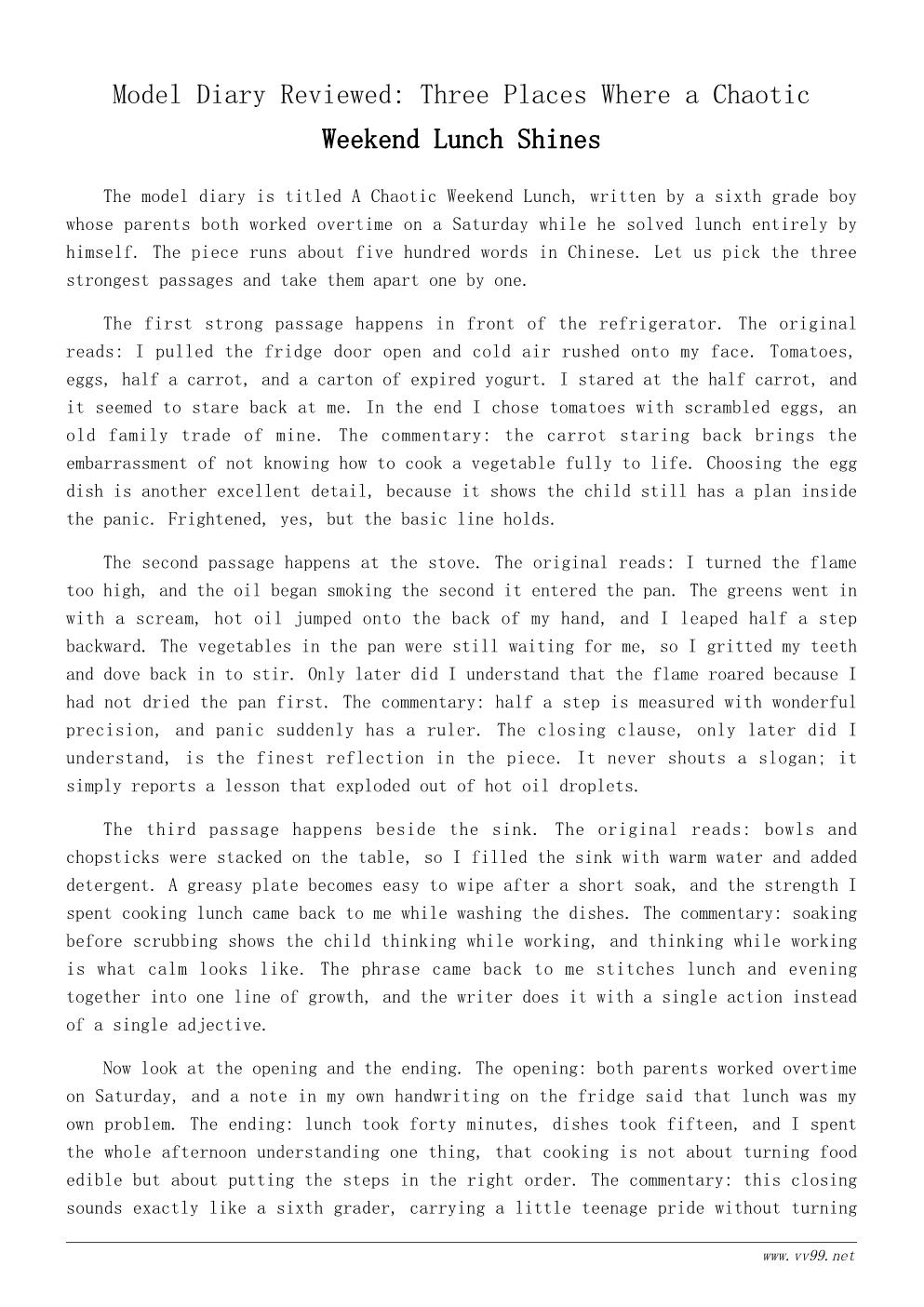
Model Diary Reviewed: Three Places Where a Chaotic Weekend Lunch Shines
The model diary is titled A Chaotic Weekend Lunch, written by a sixth grade boy whose parents both worked overtime on a Saturday while he solved lunch entirely by himself. The piece runs about five hundred words in Chinese. Let us pick the three strongest passages and take them apart one by one.
The first strong passage happens in front of the refrigerator. The original reads: I pulled the fridge door open and cold air rushed onto my face. Tomatoes, eggs, half a carrot, and a carton of expired yogurt. I stared at the half carrot, and it seemed to stare back at me. In the end I chose tomatoes with scrambled eggs, an old family trade of mine. The commentary: the carrot staring back brings the embarrassment of not knowing how to cook a vegetable fully to life. Choosing the egg dish is another excellent detail, because it shows the child still has a plan inside the panic. Frightened, yes, but the basic line holds.
The second passage happens at the stove. The original reads: I turned the flame too high, and the oil began smoking the second it entered the pan. The greens went in with a scream, hot oil jumped onto the back of my hand, and I leaped half a step backward. The vegetables in the pan were still waiting for me, so I gritted my teeth and dove back in to stir. Only later did I understand that the flame roared because I had not dried the pan first. The commentary: half a step is measured with wonderful precision, and panic suddenly has a ruler. The closing clause, only later did I understand, is the finest reflection in the piece. It never shouts a slogan; it simply reports a lesson that exploded out of hot oil droplets.
The third passage happens beside the sink. The original reads: bowls and chopsticks were stacked on the table, so I filled the sink with warm water and added detergent. A greasy plate becomes easy to wipe after a short soak, and the strength I spent cooking lunch came back to me while washing the dishes. The commentary: soaking before scrubbing shows the child thinking while working, and thinking while working is what calm looks like. The phrase came back to me stitches lunch and evening together into one line of growth, and the writer does it with a single action instead of a single adjective.
Now look at the opening and the ending. The opening: both parents worked overtime on Saturday, and a note in my own handwriting on the fridge said that lunch was my own problem. The ending: lunch took forty minutes, dishes took fifteen, and I spent the whole afternoon understanding one thing, that cooking is not about turning food edible but about putting the steps in the right order. The commentary: this closing sounds exactly like a sixth grader, carrying a little teenage pride without turning hollow.
The lesson for every child is this. The journey from panic to calm is never declared; it is performed through actions inside three stages. A choice in front of the fridge, a half step backward at the stove, a plate soaking in warm water, and the change stands up by itself. Before writing, help the child recall their own three stages. If nothing comes to mind, spend one real weekend afternoon in the kitchen. That hour is worth more than two hours of staring at the assignment.
It is also worth noticing what the model diary does not do. It never claims the writer has grown up. It never thanks the kitchen for a life lesson. It does not even use the word nervous anywhere. The writer trusts small actions to carry the feeling, and that trust is the real craft of the piece. When students ask why their own diaries feel empty, show them this quiet discipline: remove every sentence that announces an emotion, and check whether the remaining actions still produce that emotion in the reader. If they do, the diary is finished. If they do not, the missing piece is never more adjectives; it is one more honest action.
小提示:上面此文档内容仅展示完整文档里的部分内容, 若需要下载完整文档请 点击免费下载完整文档 。