文章内容
「书中—我想—我做」:三段把读后感写深
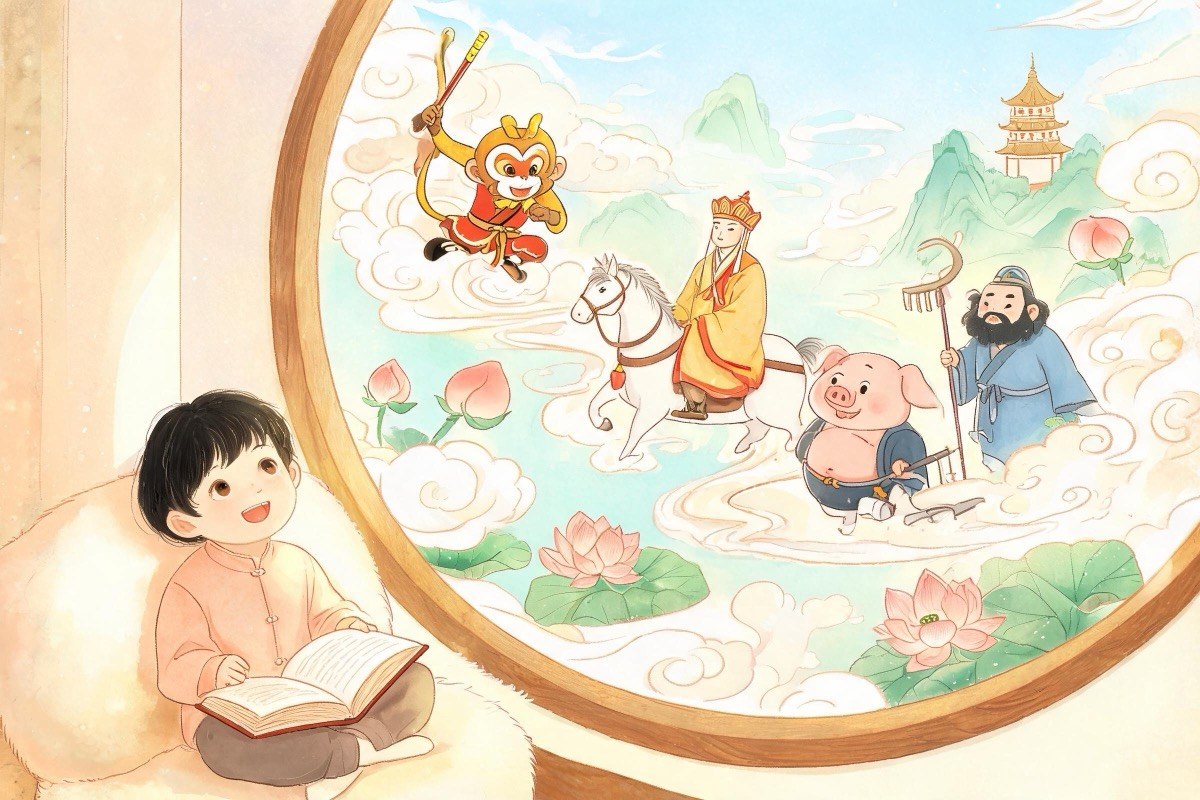
读后感写不深,常见病是"头重脚轻":《西游记》从大闹天宫复述到取经归来,占了大半篇幅,感想只剩最后两句"我要学习孙悟空的精神"。改法是把结构倒过来,用"书中—我想—我做"三段走。
第一段"书中",只干一件事:选定一个点,引一两句原文,收住。假设选三打白骨精,就写"孙悟空第三次举起金箍棒,唐僧念起了紧箍咒。他疼得打滚,棒子还是落了下去"。两行,结束。不要从石猴出世讲起,读者读过书,不需要你替他讲剧情。
第二段"我想",是全文的心脏,字数要最多,大约占一半。怎么想?从那个点往自己身上拉。假设接着上面写:"我忽然想起上周的数学竞赛培训。老师讲难题的思路,我听懂了,回家一做全错。孙悟空挨着紧箍咒还要打妖,我挨一次失败就把棒子扔了。他抗的是师父的误解,我抗的只是一道错题。"想,就是拿书里的事跟自己的事对照,找出差的那一截。这一段里禁止出现"我们要学习"这种话,只写你自己经历过的具体场景。
第三段"我做",落到一件马上能做的事,两三行收笔。假设写:"今晚开始,我给自己定了条规矩:错题重做三遍之前,不许说'我会了'。"做,不是喊口号,是写出一条能检查的规矩。
字数分配记牢:全文六百字的话,"书中"一百字以内,"我想"三百字上下,"我做"一百字左右,剩下留个开头。选点只选一个:一个人物、一个情节、甚至一句话都行。三个点各写一段,那不叫深,叫摊大饼。
自查方法:写完数一数复述剧情的字数。超过全文三分之一,就把剧情删到两行,把省下的字数全补给"我想"。深不深,就看第二段里有没有你自己的事。
Book—Think—Do: Three Moves That Make a Reading Response Go Deep
When a reading response lacks depth, the usual symptom is a top-heavy body: the writer retells Journey to the West from the Havoc in Heaven to the scripture return, filling most of the page, leaving two sentences of feeling at the end—"I should learn from Sun Wukong's spirit." The fix is to invert the structure and walk three moves: Book—Think—Do.
Move one, "Book," does exactly one thing: pick a single point, quote one or two lines, stop. Suppose you choose the thrice-striking-the-demon episode: "On the third raise of the Golden Cudgel, Tang Seng began chanting the fillet spell. Wukong writhed in pain, and the cudgel still came down." Two lines. Done. Don't start from the stone monkey's birth; your readers have read the book.
Move two, "Think," is the heart of the piece and should take the most words—about half. How to think? Pull that point toward yourself. Continuing the example: "It reminded me of last week's math contest training. I understood the teacher's method in class, then got everything wrong at home. Sun Wukong swung the cudgel even while the fillet burned his head; I dropped mine after one failure. He withstood his master's misunderstanding; I could not withstand a single wrong problem." Thinking means placing the book beside your life and finding the missing piece. No "we should learn" sentences here—only your own concrete scenes.
Move three, "Do," lands on one thing you can start immediately, closing in two or three lines. For example: "Starting tonight, I made myself a rule: no saying 'I've got it' until a wrong problem is redone three times." Doing is not a slogan; it is a rule someone else could check.
Remember the word budget: for a 600-word piece, keep "Book" under 100 words, "Think" around 300, "Do" about 100, and save the rest for the opening. Choose one point only: one character, one episode, even one sentence. Three points with one paragraph each is not depth—that is spreading butter too thin.
Self-check: count the words spent retelling the plot. If they pass one third of the piece, cut the plot down to two lines and give every saved word to "Think." Depth is measured by whether your own life appears in the middle paragraph.
范例点评:同一个人物,为什么他写得比我深
两篇都写猪八戒,第一篇得分平平,第二篇被老师当范文读。差在哪?把两段拆开对比就清楚了。
第一篇这样开头:"猪八戒好吃、好睡、爱耍小聪明,但他也很勇敢,最后也封了净坛使者。我们要学习他知错就改。"三句话把猪八戒的一生说完了。问题一:全是结论,没有过程。"爱耍小聪明"是标签,读者看不到任何画面。问题二:优点缺点列完就收尾,感想只有"知错就改"四个字,跟《西游记》没关系,换成《水浒传》也能用。这种段落我管它叫"人物说明书",说明书不感动人。
第二篇只抓一个细节:"师徒被妖怪困在鹰愁涧那晚,猪八戒把行李摊在地上,一件一件分:你的、我的、散伙各拿一半。他分行李的时候,沙僧没说话,孙悟空不在。我读到这里笑不出来,因为我干过一样的事。上个月合唱比赛排练最难的那周,我在草稿纸上写'退出合唱队去练钢琴',跟分行李只差一步。猪八戒不是坏,他是算不清坚持到底值不值。后来他到底没散伙,一路挑担子到了灵山。我合唱比赛也上了台,唱得一般,但那张草稿纸我撕了。"
点评这段好在哪。第一,它选的是猪八戒最丢脸的一幕,不选封佛的高光,丢脸处才有戏。第二,"分行李"这个细节全书只出现一次,小得没人抢,写的人却最多。第三,"我干过一样的事"一句把书和作者接上了,合唱队草稿纸就是作者的行李。第四,结尾不喊口号,落在"撕了草稿纸"这个动作上,动作就是感想。
照着改的操作:先列出《西游记》里让你停下来多看一眼的三个场面,多半是狼狈的、好笑的、不公平的场面;从里面挑一个,写两行复述;再问自己"我干过类似的事吗",把答案写成一段;最后用一个动作收尾。全程不许出现"我们要学习"。
A Model Paragraph Critiqued: Same Character, Why Does It Go Deeper
Two reading responses both write about Zhu Bajie. The first scores middling; the second gets read aloud as a model. What's the difference? Take the two paragraphs apart and it shows.
The first opens like this: "Zhu Bajie eats too much, sleeps too much, and loves petty tricks, but he is also brave and is finally made the Altar Cleansing Messenger. We should learn from his willingness to fix mistakes." Three sentences finish his whole life. Problem one: all conclusions, no process. "Loves petty tricks" is a label; no picture appears. Problem two: list the pros and cons, then end with the four characters "fix mistakes" as the takeaway—nothing about Journey to the West; it would fit Outlaws of the Marsh just as well. I call this kind of paragraph a character fact sheet, and fact sheets move nobody.
The second grabs one detail: "The night the master and disciples were trapped at Eagle Sorrow Gorge, Zhu Bajie spread the luggage on the ground and divided it item by item: yours, mine, half each if we part ways. When he split the bags, Sha Wujing said nothing and Sun Wukong was away. I could not laugh reading this, because I have done the same thing. During the hardest rehearsal week of last month's choir contest, I wrote on scratch paper, 'Quit the choir, focus on piano'—one step from splitting the luggage. Zhu Bajie isn't evil; he can't work out whether sticking it out pays off. In the end he never left, shouldering loads all the way to Vulture's Peak. I also went on stage at the choir contest. We sang plainly, but I tore up that scratch paper."
Why this paragraph works. First, it picks Zhu Bajie's most disgraceful scene, not his moment of enlightenment—drama lives in disgrace. Second, the luggage-splitting appears once in the whole book: small enough that nobody else claims it, rich enough to carry a writer. Third, "I have done the same thing" connects the book to the author; the choir scratch paper is his luggage. Fourth, the ending makes no slogan—it lands on the act of tearing the paper, and the act is the takeaway.
Copyable steps: first list three scenes in Journey to the West that made you pause—usually awkward, funny, or unfair ones; pick one and retell it in two lines; then ask yourself "have I done something like this?" and write the answer as a paragraph; close with one action. The phrase "we should learn" is banned throughout.
小提示:上面此文档内容仅展示完整文档里的部分内容, 若需要下载完整文档请 点击免费下载完整文档 。