文章内容
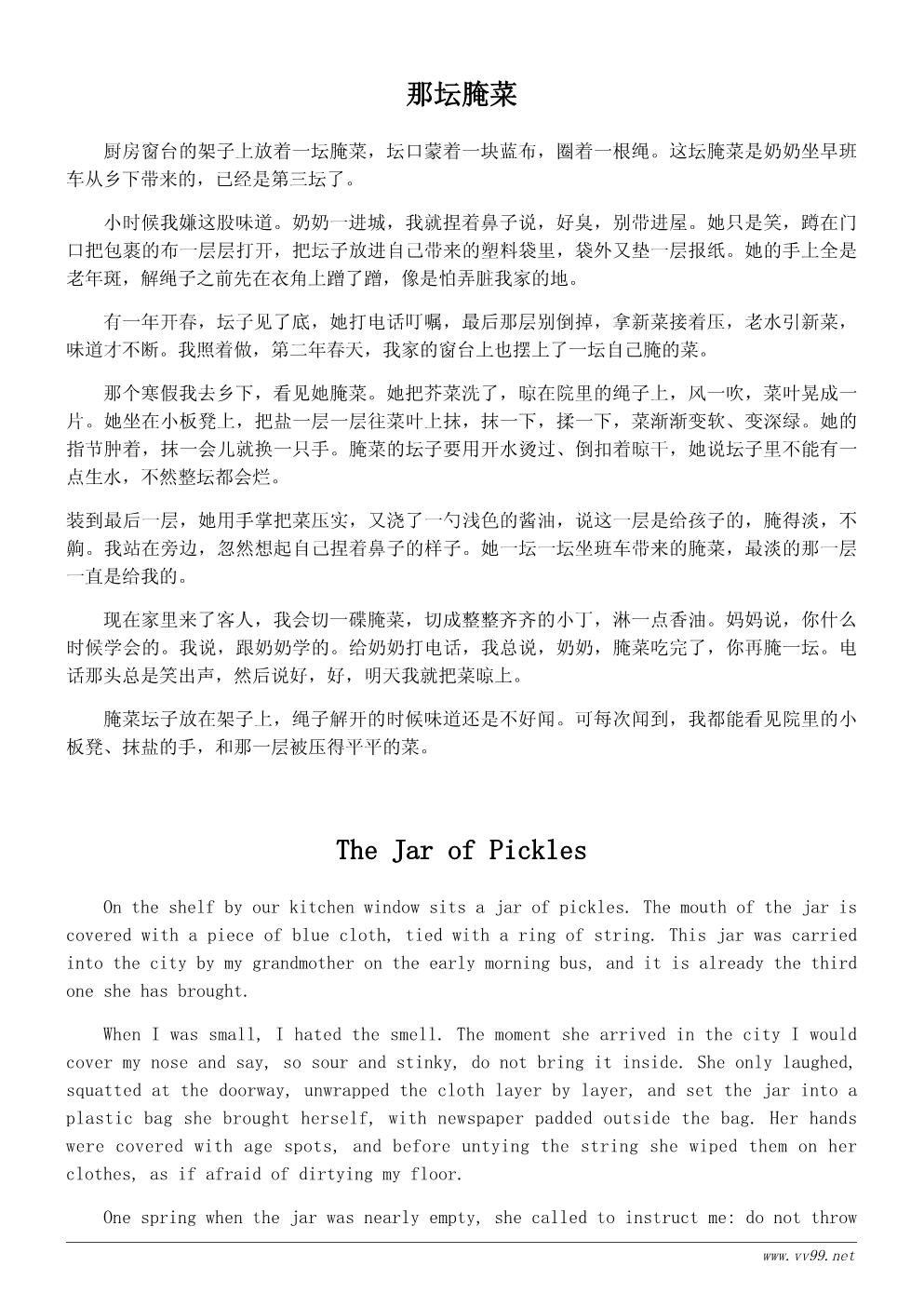
那坛腌菜
厨房窗台的架子上放着一坛腌菜,坛口蒙着一块蓝布,圈着一根绳。这坛腌菜是奶奶坐早班车从乡下带来的,已经是第三坛了。
小时候我嫌这股味道。奶奶一进城,我就捏着鼻子说,好臭,别带进屋。她只是笑,蹲在门口把包裹的布一层层打开,把坛子放进自己带来的塑料袋里,袋外又垫一层报纸。她的手上全是老年斑,解绳子之前先在衣角上蹭了蹭,像是怕弄脏我家的地。
有一年开春,坛子见了底,她打电话叮嘱,最后那层别倒掉,拿新菜接着压,老水引新菜,味道才不断。我照着做,第二年春天,我家的窗台上也摆上了一坛自己腌的菜。
那个寒假我去乡下,看见她腌菜。她把芥菜洗了,晾在院里的绳子上,风一吹,菜叶晃成一片。她坐在小板凳上,把盐一层一层往菜叶上抹,抹一下,揉一下,菜渐渐变软、变深绿。她的指节肿着,抹一会儿就换一只手。腌菜的坛子要用开水烫过、倒扣着晾干,她说坛子里不能有一点生水,不然整坛都会烂。
装到最后一层,她用手掌把菜压实,又浇了一勺浅色的酱油,说这一层是给孩子的,腌得淡,不齁。我站在旁边,忽然想起自己捏着鼻子的样子。她一坛一坛坐班车带来的腌菜,最淡的那一层一直是给我的。
现在家里来了客人,我会切一碟腌菜,切成整整齐齐的小丁,淋一点香油。妈妈说,你什么时候学会的。我说,跟奶奶学的。给奶奶打电话,我总说,奶奶,腌菜吃完了,你再腌一坛。电话那头总是笑出声,然后说好,好,明天我就把菜晾上。
腌菜坛子放在架子上,绳子解开的时候味道还是不好闻。可每次闻到,我都能看见院里的小板凳、抹盐的手,和那一层被压得平平的菜。
The Jar of Pickles
On the shelf by our kitchen window sits a jar of pickles. The mouth of the jar is covered with a piece of blue cloth, tied with a ring of string. This jar was carried into the city by my grandmother on the early morning bus, and it is already the third one she has brought.
When I was small, I hated the smell. The moment she arrived in the city I would cover my nose and say, so sour and stinky, do not bring it inside. She only laughed, squatted at the doorway, unwrapped the cloth layer by layer, and set the jar into a plastic bag she brought herself, with newspaper padded outside the bag. Her hands were covered with age spots, and before untying the string she wiped them on her clothes, as if afraid of dirtying my floor.
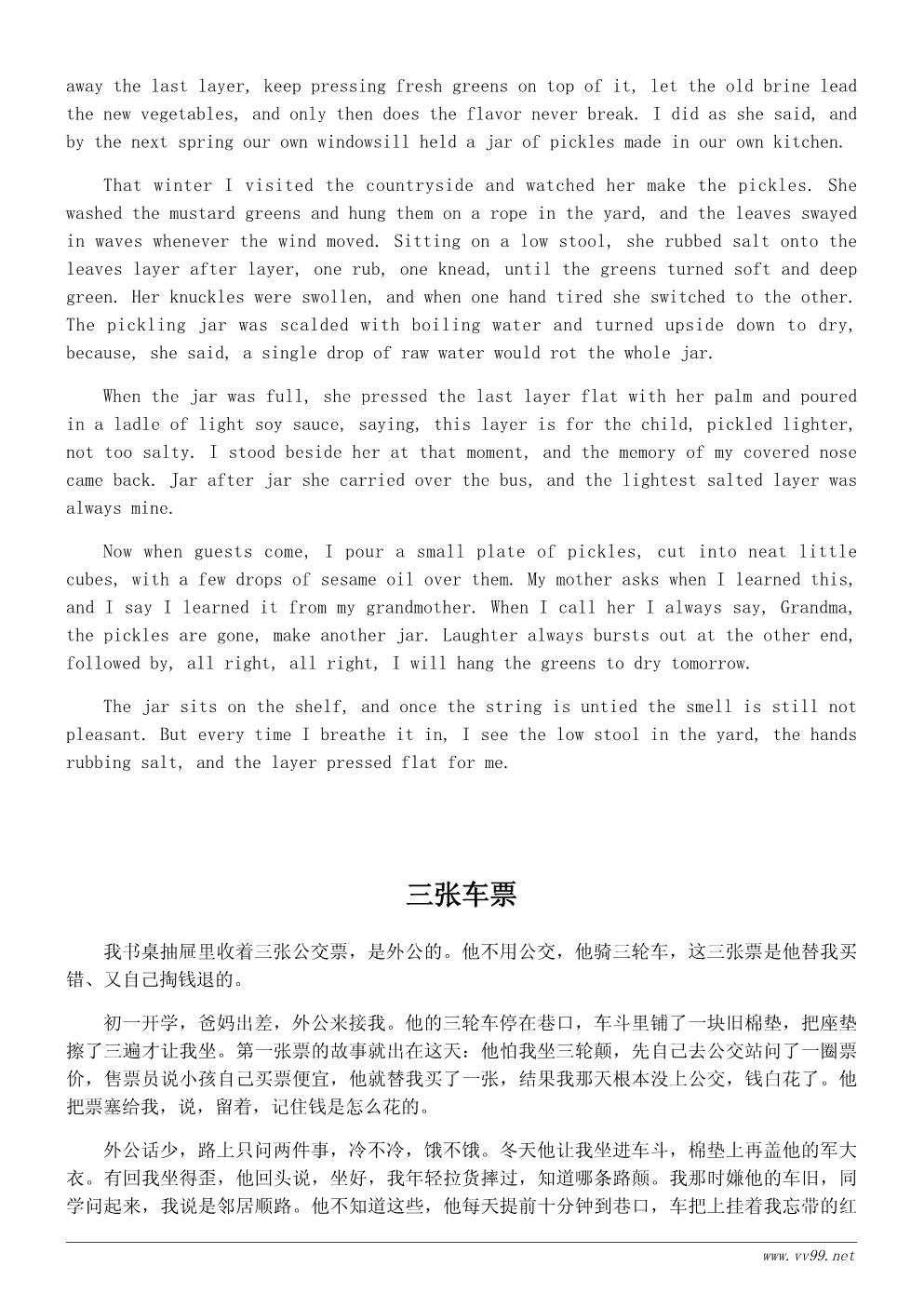
One spring when the jar was nearly empty, she called to instruct me: do not throw away the last layer, keep pressing fresh greens on top of it, let the old brine lead the new vegetables, and only then does the flavor never break. I did as she said, and by the next spring our own windowsill held a jar of pickles made in our own kitchen.
That winter I visited the countryside and watched her make the pickles. She washed the mustard greens and hung them on a rope in the yard, and the leaves swayed in waves whenever the wind moved. Sitting on a low stool, she rubbed salt onto the leaves layer after layer, one rub, one knead, until the greens turned soft and deep green. Her knuckles were swollen, and when one hand tired she switched to the other. The pickling jar was scalded with boiling water and turned upside down to dry, because, she said, a single drop of raw water would rot the whole jar.
When the jar was full, she pressed the last layer flat with her palm and poured in a ladle of light soy sauce, saying, this layer is for the child, pickled lighter, not too salty. I stood beside her at that moment, and the memory of my covered nose came back. Jar after jar she carried over the bus, and the lightest salted layer was always mine.
Now when guests come, I pour a small plate of pickles, cut into neat little cubes, with a few drops of sesame oil over them. My mother asks when I learned this, and I say I learned it from my grandmother. When I call her I always say, Grandma, the pickles are gone, make another jar. Laughter always bursts out at the other end, followed by, all right, all right, I will hang the greens to dry tomorrow.
The jar sits on the shelf, and once the string is untied the smell is still not pleasant. But every time I breathe it in, I see the low stool in the yard, the hands rubbing salt, and the layer pressed flat for me.
三张车票
我书桌抽屉里收着三张公交票,是外公的。他不用公交,他骑三轮车,这三张票是他替我买错、又自己掏钱退的。
初一开学,爸妈出差,外公来接我。他的三轮车停在巷口,车斗里铺了一块旧棉垫,把座垫擦了三遍才让我坐。第一张票的故事就出在这天:他怕我坐三轮颠,先自己去公交站问了一圈票价,售票员说小孩自己买票便宜,他就替我买了一张,结果我那天根本没上公交,钱白花了。他把票塞给我,说,留着,记住钱是怎么花的。
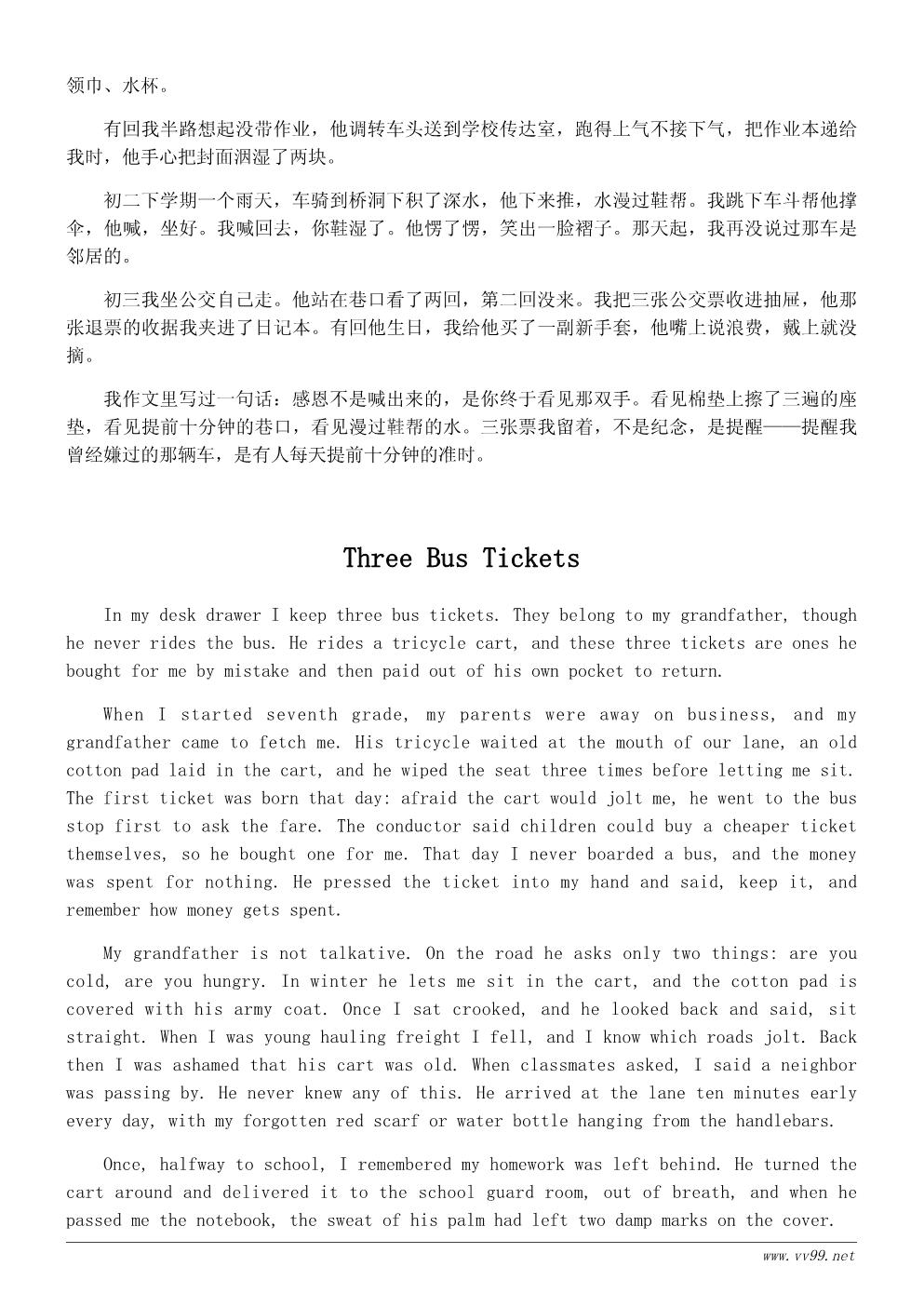
外公话少,路上只问两件事,冷不冷,饿不饿。冬天他让我坐进车斗,棉垫上再盖他的军大衣。有回我坐得歪,他回头说,坐好,我年轻拉货摔过,知道哪条路颠。我那时嫌他的车旧,同学问起来,我说是邻居顺路。他不知道这些,他每天提前十分钟到巷口,车把上挂着我忘带的红领巾、水杯。
有回我半路想起没带作业,他调转车头送到学校传达室,跑得上气不接下气,把作业本递给我时,他手心把封面洇湿了两块。
初二下学期一个雨天,车骑到桥洞下积了深水,他下来推,水漫过鞋帮。我跳下车斗帮他撑伞,他喊,坐好。我喊回去,你鞋湿了。他愣了愣,笑出一脸褶子。那天起,我再没说过那车是邻居的。
初三我坐公交自己走。他站在巷口看了两回,第二回没来。我把三张公交票收进抽屉,他那张退票的收据我夹进了日记本。有回他生日,我给他买了一副新手套,他嘴上说浪费,戴上就没摘。
我作文里写过一句话:感恩不是喊出来的,是你终于看见那双手。看见棉垫上擦了三遍的座垫,看见提前十分钟的巷口,看见漫过鞋帮的水。三张票我留着,不是纪念,是提醒——提醒我曾经嫌过的那辆车,是有人每天提前十分钟的准时。
Three Bus Tickets
In my desk drawer I keep three bus tickets. They belong to my grandfather, though he never rides the bus. He rides a tricycle cart, and these three tickets are ones he bought for me by mistake and then paid out of his own pocket to return.
When I started seventh grade, my parents were away on business, and my grandfather came to fetch me. His tricycle waited at the mouth of our lane, an old cotton pad laid in the cart, and he wiped the seat three times before letting me sit. The first ticket was born that day: afraid the cart would jolt me, he went to the bus stop first to ask the fare. The conductor said children could buy a cheaper ticket themselves, so he bought one for me. That day I never boarded a bus, and the money was spent for nothing. He pressed the ticket into my hand and said, keep it, and remember how money gets spent.
My grandfather is not talkative. On the road he asks only two things: are you cold, are you hungry. In winter he lets me sit in the cart, and the cotton pad is covered with his army coat. Once I sat crooked, and he looked back and said, sit straight. When I was young hauling freight I fell, and I know which roads jolt. Back then I was ashamed that his cart was old. When classmates asked, I said a neighbor was passing by. He never knew any of this. He arrived at the lane ten minutes early every day, with my forgotten red scarf or water bottle hanging from the handlebars.
Once, halfway to school, I remembered my homework was left behind. He turned the cart around and delivered it to the school guard room, out of breath, and when he passed me the notebook, the sweat of his palm had left two damp marks on the cover.
One rainy day in the second term of eighth grade, the cart reached deep water under the bridge. He got out to push, and the water rose over his shoe tops. I jumped into the cart and held the umbrella over him. He shouted, sit straight. I shouted back, your shoes are soaked. He froze for a second, then his whole face broke into laughing wrinkles. From that day on, I never again claimed that cart belonged to a neighbor.
In ninth grade I took the bus myself. He stood at the mouth of the lane and watched twice. The second time he did not come. I put the three bus tickets in the drawer, and the refund slip he once got I pressed into my diary. On his birthday I bought him a new pair of gloves. His mouth said it was a waste, but once he put them on he never took them off.
I once wrote one sentence in an essay: gratitude is not shouted, it is the moment you finally see the hands. The seat wiped three times before the cotton pad, the lane reached ten minutes early, the water over the shoe tops. I keep the three tickets not as a souvenir but as a reminder, a reminder that the cart I once despised was the daily punctuality of a person who arrived ten minutes early.
小提示:上面此文档内容仅展示完整文档里的部分内容, 若需要下载完整文档请 点击免费下载完整文档 。