文章内容
书里那碗热汤面
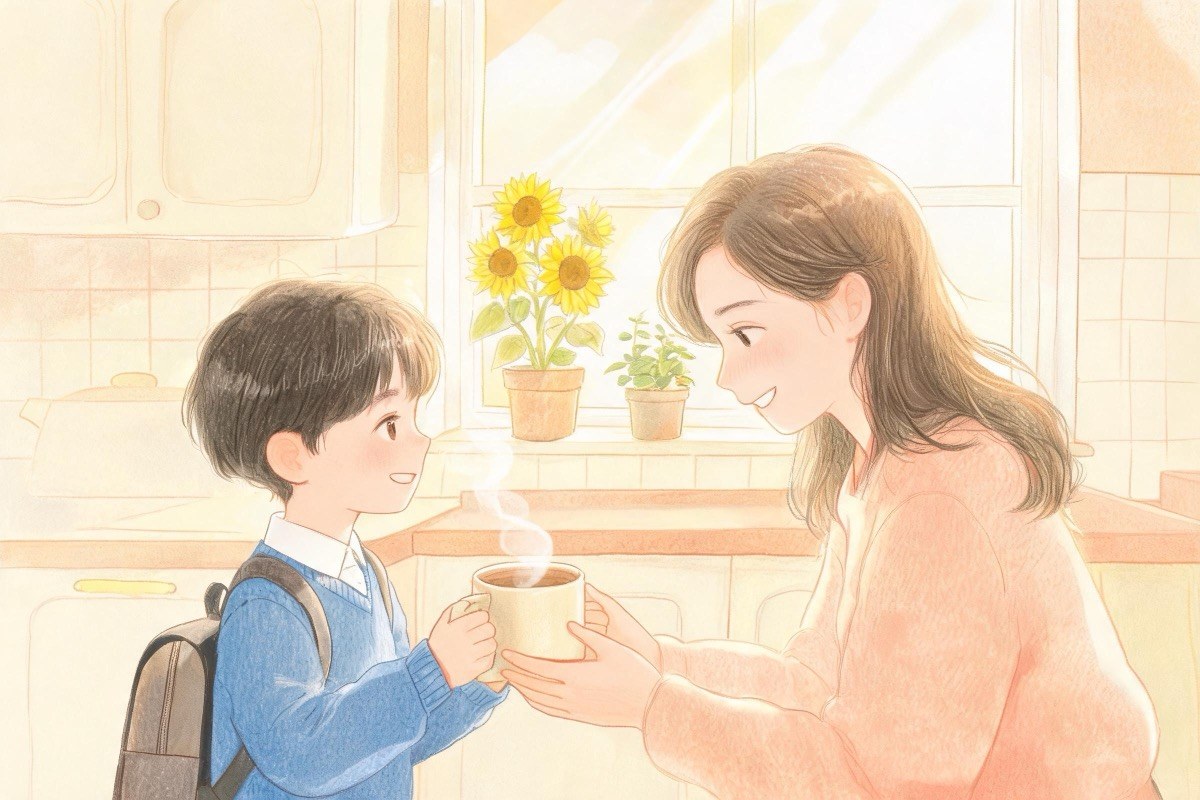
这个月语文课读《学会感恩》,里面有一段我读了三遍:书里的孩子发现妈妈每天上夜班,半夜回来手都是凉的,他就学着烧水、下面,把一碗热汤面端到妈妈门口,还在碗底下压了一张纸条,写着妈妈辛苦了。
读到这里我的脸有点热。因为我家正好相反——是我每天在吃妈妈煮的面。妈妈早上六点起床,先煮面再喊我起床,面里卧一个鸡蛋,葱花切得碎碎的。我从来都是起床就吃,吃完抹嘴就走,连一句好吃都没说过。书里的孩子跟我一样大,他已经开始给妈妈煮面了。
书里还写了一句我抄在读书笔记上的话:感恩不是等大事情,是看见身边的小事情。我合上书想了想,妈妈煮了六年的面,我一次都没看见过那六点十分的闹钟。她怕我迟到,自己的早饭总是站在厨房门口两口吃完。
读完这本书,我给自己列了三件要做的事。第一件这周末就做:学煮一碗面,给妈妈卧鸡蛋,葱花切碎。我跟奶奶说想学烧水下面,奶奶笑得直点头,教我先烧水再下面,锅开了要看着,别烫着。第二件,从今天起每天出门前说一句妈妈我走了。第三件,把读书笔记上那句话贴在书桌前,每周看一遍,看看自己做到了没有。
我还问过妈妈,为什么天天煮面不嫌麻烦。妈妈说,看我吃完去上学,她一天就有劲气。这句话我也抄进了读书笔记。从那天起我留意到,她站在门口吃早饭从来不超过三分钟,碗筷随手就收进水池。
我把这个计划写进周记,老师批了四个字:说到做到。我想,读后感不该只写在纸上。书里那碗面端到门口,我这碗面要端到妈妈下班回家的时候。她推开门能看见灯亮着、面在锅里热着,那时候她脸上的样子,我一定好好看清楚。
The Bowl of Hot Noodles in the Book
This month our Chinese class read the book Learning Gratitude. There is one passage I read three times: the child in the book discovers that his mother works the night shift every day and comes home with cold hands, so he learns to boil water and cook noodles, carries a bowl of hot noodle soup to her door, and tucks a note under the bowl that says, Mom, thank you for your hard work.
My face went warm at that part, because my home is exactly the opposite. It is I who eat the noodles my mother cooks, every single day. She gets up at six in the morning, cooks the noodles before waking me, drops an egg into the bowl, and chops the scallions very fine. I always got up, ate, wiped my mouth, and left, without ever once saying they were delicious. The child in the book is my age, and he has already started cooking for his mother.
The book has one sentence I copied into my reading notebook: gratitude is not waiting for big events; it is seeing the small things right beside you. I closed the book and thought it over. My mother has cooked noodles for six years, and I never once noticed the alarm at six ten. Afraid I would be late for school, she always eats her own breakfast standing at the kitchen doorway in two or three bites.
After finishing the book I made myself a list of three things. The first happens this weekend: learn to cook one bowl of noodles for my mother, with an egg in it and the scallions chopped fine. I told my grandmother I wanted to learn, and she nodded with a smile, teaching me to boil the water first, then add the noodles, and to watch the pot once it boils so I do not get scalded. The second: starting today, say Mom, I am leaving every morning before I go out. The third: tape that sentence from my notebook onto the front of my desk, read it once a week, and check whether I have kept it.
I once asked my mother why she never minded the trouble of cooking noodles every day. She said that watching me finish my bowl and leave for school gives her energy for the whole day. I copied that sentence into my reading notebook too. From that day on I noticed that she never spends more than three minutes eating her own breakfast at the doorway, and her bowl and chopsticks go straight into the sink.
I wrote this plan into my weekly journal, and the teacher marked four characters beside it: walk what you talk. A reading response, I think, should not stay on paper. The child in the book carried his bowl to the door; my bowl will be carried when my mother comes home from work. When she opens the door and sees the light on and the noodles warming in the pot, I will watch her face carefully, to remember it well.
雨伞和倒掉的半杯水
《学会感恩》里最让我放不下的,是那个下雨的片段。书里的父亲在学校门口举着伞等儿子,伞全歪向儿子那边,自己的半边身子湿透。儿子开始不懂,后来看见父亲湿透的肩膀,一下子长大了。
这一段像照镜子。去年秋天我也遇过一模一样的事。放学雨下得大,爷爷骑着自行车来送伞,伞塞给我,他自己披一件旧雨衣。回家路上我坐在他后座,雨衣后背贴在身上,湿了一大片。我当时说了什么?我说,这伞太小了。爷爷没接话,只是把车骑得更稳。
还有一件更让我脸红的事。爷爷每天下午给我倒半杯温水,放在书桌角上。有回我嫌水没味道,当着他的面把半杯水倒进了花盆。他愣了一下,说,倒掉多可惜,你想喝凉的我给你换。读完书里那个湿透的肩膀,我忽然想起爷爷那天愣住的样子。他给我倒的水,从烧开到晾温,要试三遍温度。后来我留意过,他把杯子放在暖气片旁边又挪开,怕太烫又怕凉。那半杯水的温度,回回刚刚好。
这本书让我明白,感恩不是写出来的漂亮句子,是把身边的事接住。所以我给自己定了两件事。第一,把谢谢说出口。这周一放学,我走到爷爷跟前说,爷爷,谢谢你今天又来接我。他先是愣住,然后笑得眼睛眯成一条缝,连声说,自家人,谢什么。第二,从今天起,书桌角上那半杯水,我一口不剩喝掉。爷爷再递水,我双手接。
老师在读后感后面写:联系自己,写得真实。我想再补一句:书里的儿子看见了湿透的肩膀,我看见了愣住的那一下和试三遍温度的手。从明天起,半杯水喝光,雨伞我主动接过来撑。感恩从身边做起,就从这半杯做起。
The Umbrella and the Poured-Out Half Glass
The passage of Learning Gratitude I cannot put down is the one set in the rain. The father in the book waits at the school gate holding an umbrella for his son, the whole canopy leaning toward the son while one half of his own body soaks through. The son does not understand at first, then one day he sees the soaked shoulder of his father and grows up in an instant.
That passage reads like a mirror. Last autumn I lived the very same scene. The rain fell hard at dismissal, and my grandfather came cycling to bring an umbrella. He pressed the umbrella into my hands and put on an old raincoat himself. On the ride home, sitting behind him, I saw the raincoat clinging to his back, soaked across a wide patch. And what did I say then? I said, this umbrella is too small. He did not answer. He only rode the bike more steadily.
One more memory makes me blush. Every afternoon my grandfather pours me half a glass of warm water and sets it at the corner of my desk. Once, complaining that plain water has no taste, I poured the half glass into a flowerpot right in front of him. He froze for a moment, then said, what a waste to throw it away, I will change it for cool water if you like. After reading about that soaked shoulder in the book, I suddenly remembered the way he had frozen that day. The water he pours me is tested three times for temperature, from boiling down to warm. Later I paid attention: he set the cup by the radiator and then moved it away, afraid it would be too hot or too cold. The temperature of that half glass was always just right.
This book taught me that gratitude is not pretty sentences on paper but catching the things right beside you. So I set myself two tasks. First, say the thanks out loud. This Monday after school I walked up to my grandfather and said, Grandpa, thank you for coming for me again today. He froze first, then his eyes narrowed into smiling slits, and he kept saying, we are family, no need for thanks. Second, starting today, I drink every drop of the half glass at the corner of my desk. When he hands me water again, I receive it with both hands.
My teacher wrote after my response: it connects to your own life and reads true. I would add one line: the son in the book saw the soaked shoulder; I saw the frozen moment and the hands that test the water three times. Starting tomorrow, the half glass gets drunk empty, and when it rains I take the umbrella first. Gratitude begins with what is near you, and it begins with this half glass.
小提示:上面此文档内容仅展示完整文档里的部分内容, 若需要下载完整文档请 点击免费下载完整文档 。