文章内容
文章内容
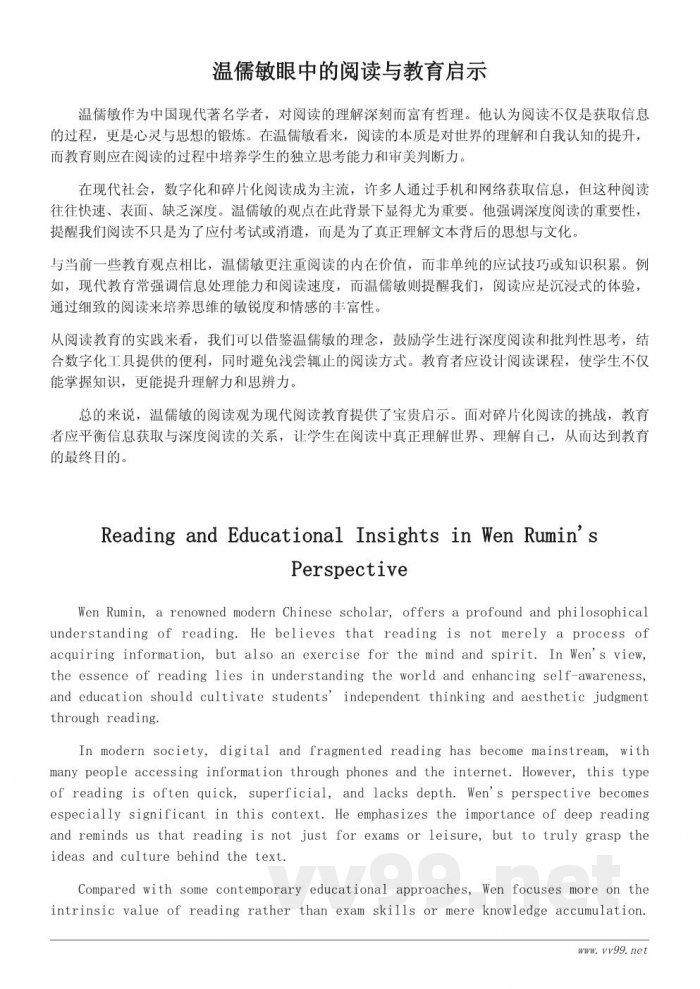
温儒敏眼中的阅读与教育启示
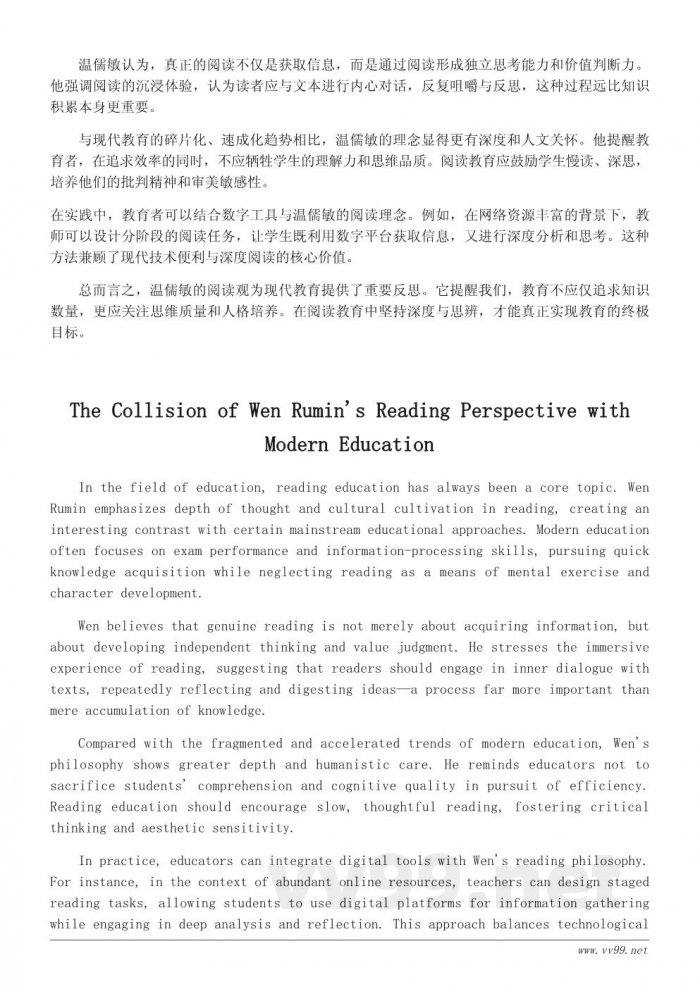
温儒敏作为中国现代著名学者,对阅读的理解深刻而富有哲理。他认为阅读不仅是获取信息的过程,更是心灵与思想的锻炼。在温儒敏看来,阅读的本质是对世界的理解和自我认知的提升,而教育则应在阅读的过程中培养学生的独立思考能力和审美判断力。
在现代社会,数字化和碎片化阅读成为主流,许多人通过手机和网络获取信息,但这种阅读往往快速、表面、缺乏深度。温儒敏的观点在此背景下显得尤为重要。他强调深度阅读的重要性,提醒我们阅读不只是为了应付考试或消遣,而是为了真正理解文本背后的思想与文化。
与当前一些教育观点相比,温儒敏更注重阅读的内在价值,而非单纯的应试技巧或知识积累。例如,现代教育常强调信息处理能力和阅读速度,而温儒敏则提醒我们,阅读应是沉浸式的体验,通过细致的阅读来培养思维的敏锐度和情感的丰富性。
从阅读教育的实践来看,我们可以借鉴温儒敏的理念,鼓励学生进行深度阅读和批判性思考,结合数字化工具提供的便利,同时避免浅尝辄止的阅读方式。教育者应设计阅读课程,使学生不仅能掌握知识,更能提升理解力和思辨力。
总的来说,温儒敏的阅读观为现代阅读教育提供了宝贵启示。面对碎片化阅读的挑战,教育者应平衡信息获取与深度阅读的关系,让学生在阅读中真正理解世界、理解自己,从而达到教育的最终目的。
Reading and Educational Insights in Wen Rumin's Perspective
Wen Rumin, a renowned modern Chinese scholar, offers a profound and philosophical understanding of reading. He believes that reading is not merely a process of acquiring information, but also an exercise for the mind and spirit. In Wen's view, the essence of reading lies in understanding the world and enhancing self-awareness, and education should cultivate students' independent thinking and aesthetic judgment through reading.
In modern society, digital and fragmented reading has become mainstream, with many people accessing information through phones and the internet. However, this type of reading is often quick, superficial, and lacks depth. Wen's perspective becomes especially significant in this context. He emphasizes the importance of deep reading and reminds us that reading is not just for exams or leisure, but to truly grasp the ideas and culture behind the text.
Compared with some contemporary educational approaches, Wen focuses more on the intrinsic value of reading rather than exam skills or mere knowledge accumulation. Modern education often stresses information-processing ability and reading speed, whereas Wen reminds us that reading should be an immersive experience, cultivating sharp thinking and emotional richness through careful engagement with texts.
From a reading education practice standpoint, Wen's philosophy can guide us to encourage deep reading and critical thinking, leveraging the convenience of digital tools while avoiding superficial approaches. Educators should design reading programs that enable students to not only acquire knowledge but also enhance comprehension and analytical skills.
In summary, Wen Rumin's reading perspective provides valuable insights for modern reading education. Facing the challenge of fragmented reading, educators should balance information acquisition with deep reading, helping students truly understand the world and themselves through reading, achieving the ultimate goal of education.
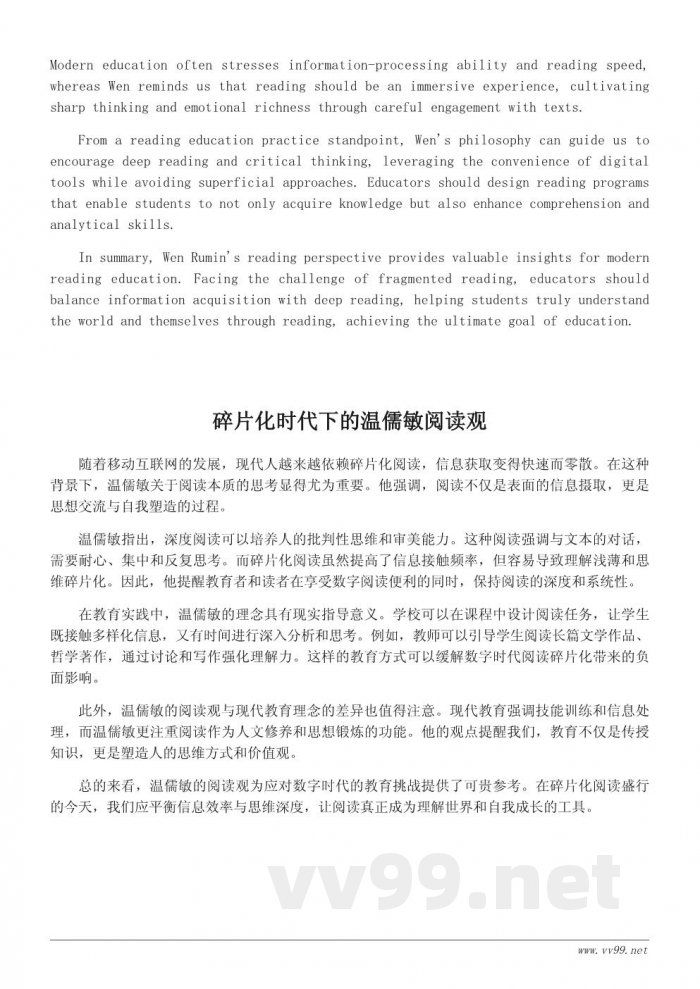
碎片化时代下的温儒敏阅读观
随着移动互联网的发展,现代人越来越依赖碎片化阅读,信息获取变得快速而零散。在这种背景下,温儒敏关于阅读本质的思考显得尤为重要。他强调,阅读不仅是表面的信息摄取,更是思想交流与自我塑造的过程。
温儒敏指出,深度阅读可以培养人的批判性思维和审美能力。这种阅读强调与文本的对话,需要耐心、集中和反复思考。而碎片化阅读虽然提高了信息接触频率,但容易导致理解浅薄和思维碎片化。因此,他提醒教育者和读者在享受数字阅读便利的同时,保持阅读的深度和系统性。
在教育实践中,温儒敏的理念具有现实指导意义。学校可以在课程中设计阅读任务,让学生既接触多样化信息,又有时间进行深入分析和思考。例如,教师可以引导学生阅读长篇文学作品、哲学著作,通过讨论和写作强化理解力。这样的教育方式可以缓解数字时代阅读碎片化带来的负面影响。
此外,温儒敏的阅读观与现代教育理念的差异也值得注意。现代教育强调技能训练和信息处理,而温儒敏更注重阅读作为人文修养和思想锻炼的功能。他的观点提醒我们,教育不仅是传授知识,更是塑造人的思维方式和价值观。
总的来看,温儒敏的阅读观为应对数字时代的教育挑战提供了可贵参考。在碎片化阅读盛行的今天,我们应平衡信息效率与思维深度,让阅读真正成为理解世界和自我成长的工具。
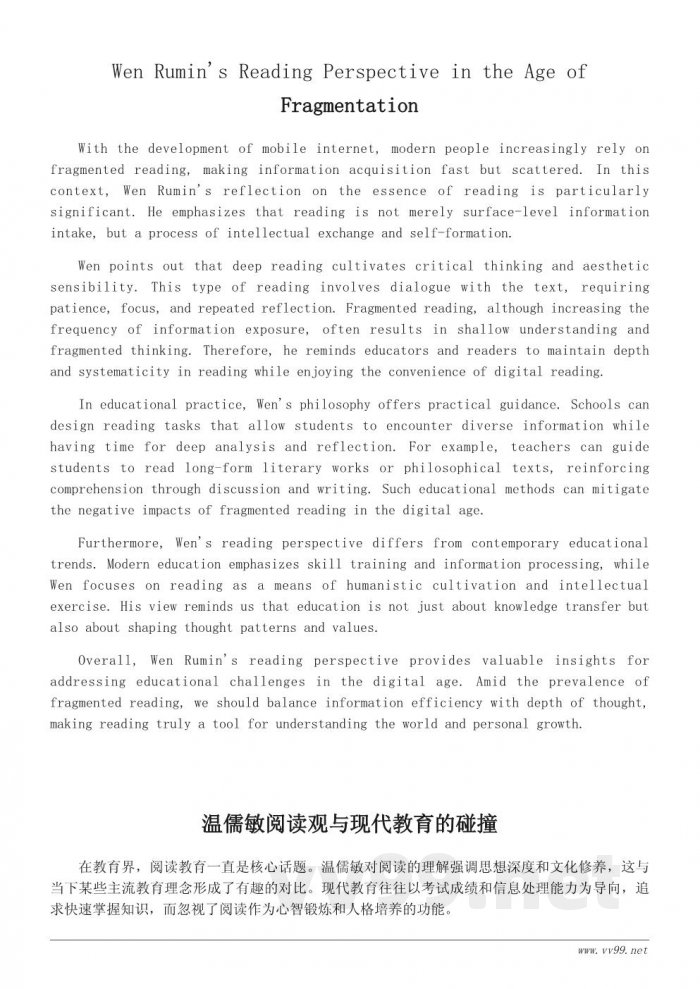
Wen Rumin's Reading Perspective in the Age of Fragmentation
With the development of mobile internet, modern people increasingly rely on fragmented reading, making information acquisition fast but scattered. In this context, Wen Rumin's reflection on the essence of reading is particularly significant. He emphasizes that reading is not merely surface-level information intake, but a process of intellectual exchange and self-formation.
Wen points out that deep reading cultivates critical thinking and aesthetic sensibility. This type of reading involves dialogue with the text, requiring patience, focus, and repeated reflection. Fragmented reading, although increasing the frequency of information exposure, often results in shallow understanding and fragmented thinking. Therefore, he reminds educators and readers to maintain depth and systematicity in reading while enjoying the convenience of digital reading.
In educational practice, Wen's philosophy offers practical guidance. Schools can design reading tasks that allow students to encounter diverse information while having time for deep analysis and reflection. For example, teachers can guide students to read long-form literary works or philosophical texts, reinforcing comprehension through discussion and writing. Such educational methods can mitigate the negative impacts of fragmented reading in the digital age.
Furthermore, Wen's reading perspective differs from contemporary educational trends. Modern education emphasizes skill training and information processing, while Wen focuses on reading as a means of humanistic cultivation and intellectual exercise. His view reminds us that education is not just about knowledge transfer but also about shaping thought patterns and values.
Overall, Wen Rumin's reading perspective provides valuable insights for addressing educational challenges in the digital age. Amid the prevalence of fragmented reading, we should balance information efficiency with depth of thought, making reading truly a tool for understanding the world and personal growth.
小提示:上面此文档内容仅展示完整文档里的部分内容, 若需要下载完整文档请 点击免费下载完整文档 。