文章内容
文章内容
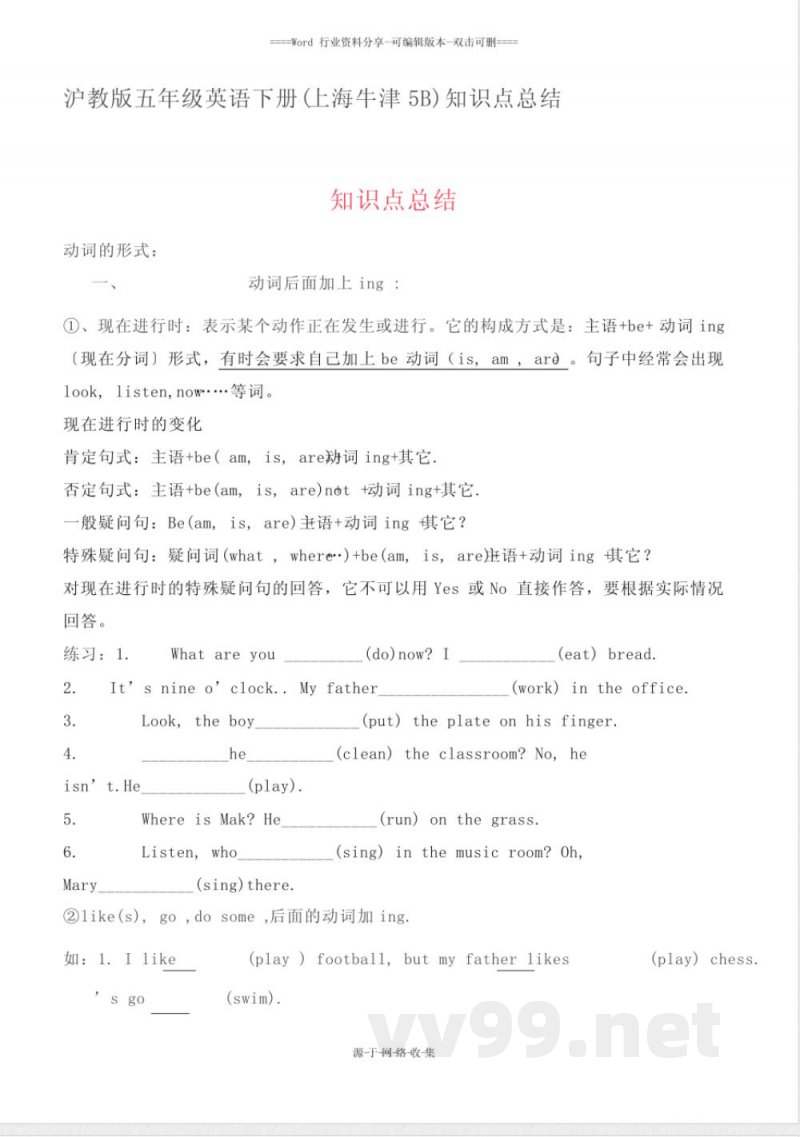
动词后面加上 -ing:
① 现在进行时:表示某个动作正在发生或进行。构成方式为:主语 + be + 动词ing(现在分词)形式,有时需加上 be 动词(is, am, are)。句子中常出现 look, listen, now 等词。
肯定句:主语 + be(am, is, are)+ 动词ing + 其他。
否定句:主语 + be(am, is, are)+ not + 动词ing + 其他。
一般疑问句:Be(am, is, are)+ 主语 + 动词ing + 其他?
特殊疑问句:疑问词(what, where)+ be(am, is, are)+ 主语 + 动词ing + 其他?
对现在进行时的特殊疑问句的回答不能直接用 Yes 或 No,要根据实际情况回答。
练习:
1. What are you doing now?
2. It's nine o'clock.
3. My father is working in the office.
4. Look, the boy isn't running on the grass.
5. Mary is playing in the music room.
6. Where is Mark? He is listening.
7. Who is singing there?
8. He is eating bread.
9. She is putting the plate on the table.
10. They are cleaning the classroom.
动词 like(s), go, do some 后的动词加 -ing,例如:I like playing football, but my father likes swimming. 我喜欢下棋。
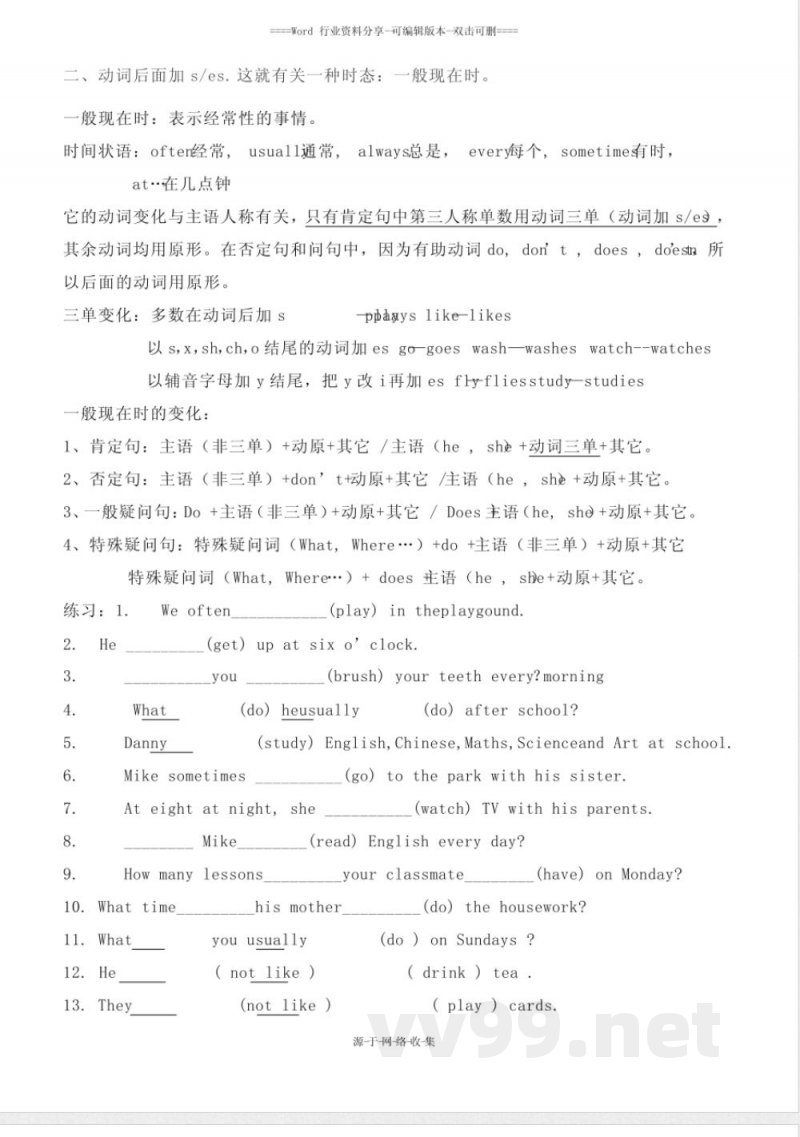
二、动词后面加 s/es:一般现在时
一般现在时表示经常性行为。时间状语:often(经常)、usually(通常)、always(总是)、ever(每次)、sometimes(有时)、at(在几点钟)。
动词变化与主语人称有关:肯定句中第三人称单数动词加 s/es,其余动词用原形。否定句和疑问句使用助动词 do/does,因此后面的动词用原形。
三单变化规则:
1. 多数动词直接加 s,例如 likes。
2. 以 s, x, sh, ch, o 结尾的动词加 es,例如 goes, washes, watches。
3. 以辅音字母加 y 结尾,把 y 改 i 再加 es,例如 flies, studies。
一般现在时句型:
1. 肯定句:主语(非三单)+ 动词原形 + 其他 / 主语(he, she, it)+ 动词三单 + 其他。
2. 否定句:主语(非三单)+ don’t + 动词原形 + 其他 / 主语(he, she, it)+ doesn’t + 动词原形 + 其他。
3. 一般疑问句:Do + 主语(非三单)+ 动词原形 + 其他 / Does + 主语(he, she, it)+ 动词原形 + 其他?
4. 特殊疑问句:特殊疑问词(What, Where)+ do + 主语(非三单)+ 动词原形 + 其他? / 特殊疑问词(What, Where)+ does + 主语(he, she, it)+ 动词原形 + 其他?
练习:
1. He often plays in the playground.
2. We get up at six o'clock.
3. What do you do every morning?
4. Danny brushes his teeth every morning.
5. He usually studies English, Chinese, Maths, Science, and Art at school.
6. Mike sometimes studies at eight at night.
7. How many lessons do you have?
8. What time do they go to the park with his sister?
9. They watch TV with their parents.
10. Does your classmate read English every day?
11. His mother usually does the housework on Monday.
说明:本文档为学习资料,仅供教学与自学使用,资源免费下载,不含任何诱导下载或捆绑程序。
小提示:上面此文档内容仅展示完整文档里的部分内容, 若需要下载完整文档请 点击免费下载完整文档。