文章内容
文章内容
学习目的学习规定
掌握内容重点难点
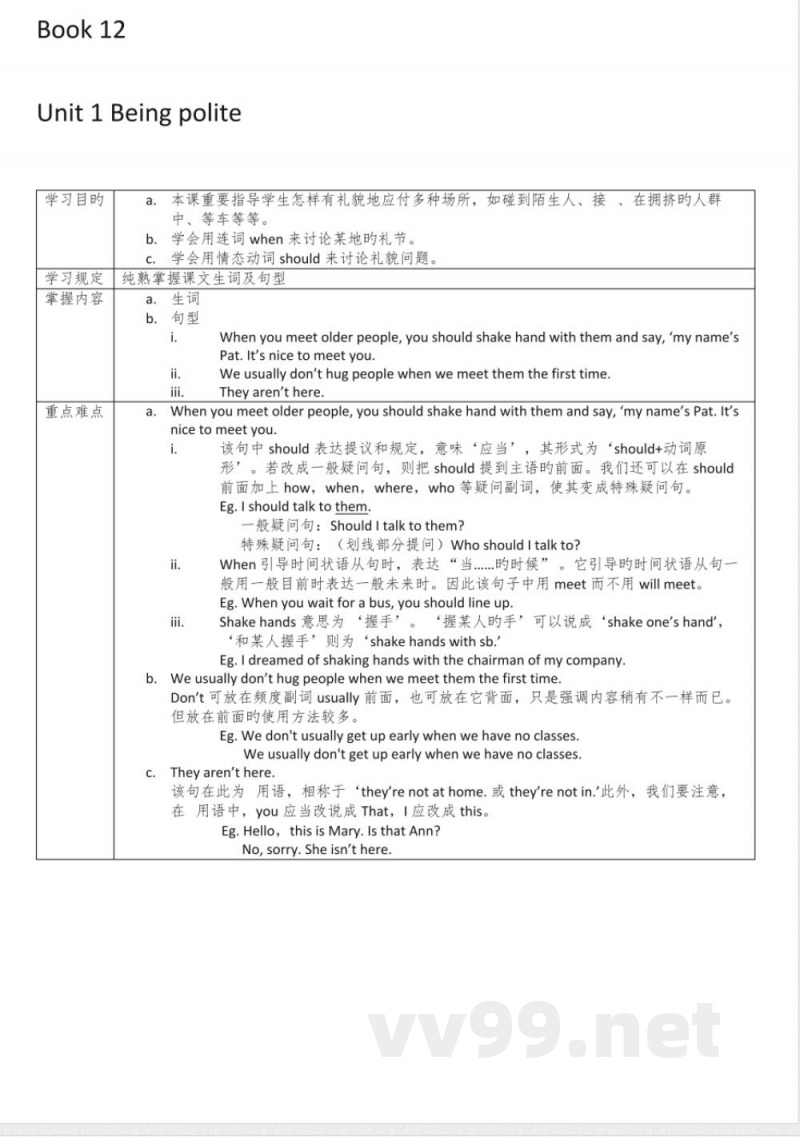
a. 本课重要指导学生怎样有礼貌地应付多种场所,如碰到陌生人、接待客人、在拥挤的人群中、等车等等。
b. 学会用连词when来讨论某地的礼节。
c. 学会用情态动词should来讨论礼貌问题。
纯熟掌握课文生词及句型
a. 生词句型
i. When you meet older people, you should shake hands with them and say, 'My name's Pat. It's nice to meet you.'
ii. We usually don't hug people when we meet them the first time.
When you meet older people, you should shake hands with them and say, 'My name's Pat. It's nice to meet you.'
该句中should表达提议和规定,意味“应当”,其形式为“should + 动词原形”。若改成一般疑问句,则把should提到主语的前面。我们还可以在should前面加上how、when、where、who等疑问副词,使其变成特殊疑问句。
Eg. I should talk to them.
一般疑问句:Should I talk to them?
特殊疑问句:Whom should I talk to?
When引导时间状语从句时,表达“当...的时候”。它引导的时间状语从句一般用一般现在时表达,一般未来时。因此该句子中用meet而不用will meet。
Eg. When you wait for a bus, you should line up.
Shake hands意思为“握手”。“握某人的手”可以说成“shake one's hand”,和某人握手,则为“shake hands with sb.”
Eg. I dreamed of shaking hands with the chairman of my company.
We usually don't hug people when we meet them the first time.
b. Don't可放在频度副词usually前面,也可放在它背面,只是强调内容稍有不同而已。但放在前面的使用方法较多。
Eg. We don't usually get up early when we have no classes.
We usually don't get up early when we have no classes.
They aren't here. 该句在此为用语,相当于“they're not at home”或“they're not in.”
此外,我们要注意,在用语中,you应当改说成That,I应改成this。
Eg. Hello, this is Mary. Is that Ann? No, sorry. She isn't here.
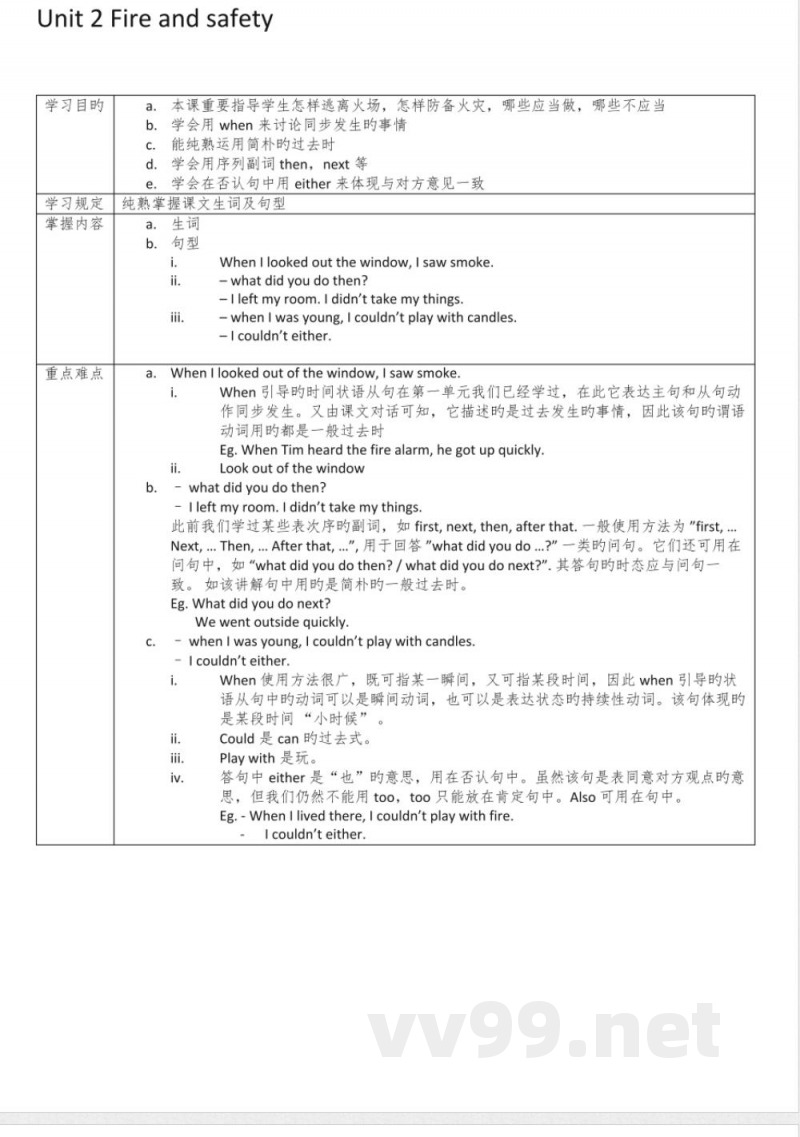
Unit 2 Fire and Safety
学习目的学习规定掌握内容
重点难点
a. 本课重要指导学生怎样逃离火场,怎样防备火灾,哪些应当做,哪些不应当做。
b. 学会用when来讨论同步发生的事情。
c. 能熟练运用简朴的过去时。
d. 学会用序列副词then、next等,学会在否定句中用either来体现与对方意见一致。
纯熟掌握课文生词及句型
a. 生词
b. 句型
i. When I looked out the window, I saw smoke. What did you do then?
- I left my room. I didn't take my things.
ii. When I was young, I couldn't play with candles. I couldn't either.
When I looked out of the window, I saw smoke.
When引导的时间状语从句在第一单元我们已经学过,在此它表达主句和从句动作同步发生。又由课文对话可知,它描述的是过去发生的事情,因此该句的谓语动词用的一般过去时。
Eg. When Tim heard the fire alarm, he got up quickly.
说明:本文档为学习资料,仅供教学与自学使用,资源免费下载,不含任何诱导下载或捆绑程序。
小提示:上面此文档内容仅展示完整文档里的部分内容, 若需要下载完整文档请 点击免费下载完整文档。