文章内容
文章内容
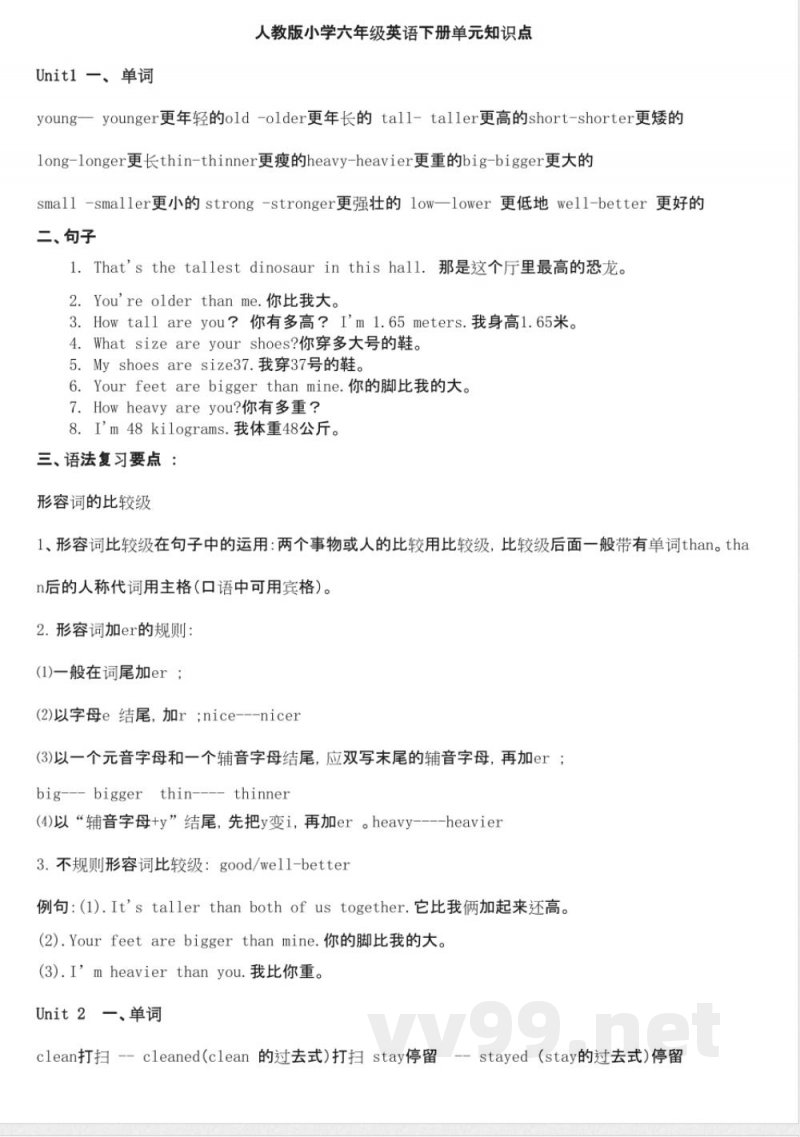
young - younger 更年轻的
old - older 更年长的
tall - taller 更高的
short - shorter 更矮的
long - longer 更长的
thin - thinner 更瘦的
heavy - heavier 更重的
big - bigger 更大的
small - smaller 更小的
strong - stronger 更强壮的
low - lower 更低的
well - better 更好的
二、句子
1. That's the tallest dinosaur in this hall. 那是这个厅里最高的恐龙。
2. You're older than me. 你比我大。
3. How tall are you? 你有多高? I'm 1.65 meters. 我身高1.65米。
4. What size are your shoes? 你穿多大号的鞋?
5. My shoes are size 37. 我穿37号的鞋。
6. Your feet are bigger than mine. 你的脚比我的大。
7. How heavy are you? 你有多重?
8. I'm 48 kilograms. 我体重48公斤。
三、语法复习要点
形容词的比较级
1. 比较两个事物或人的大小、程度时,用比较级,比较级后面一般带有 than。than 后的人称代词用主格(口语中可用宾格)。
2. 形容词加 er 的规则:
(1) 一般在词尾加 er
(2) 以字母 e 结尾,加 r,如 nice - nicer
(3) 以一个元音字母和一个辅音字母结尾,应双写末尾辅音字母再加 er,如 big - bigger, thin - thinner
(4) 以辅音字母+y结尾,先把 y 变 i 再加 er,如 heavy - heavier
3. 不规则形容词比较级:good/well - better
例句:
It’s taller than both of us together. 它比我俩加起来还高。
Your feet are bigger than mine. 你的脚比我的大。
I'm heavier than you. 我比你重。
Unit 2 一、单词
clean 打扫 - cleaned(clean 的过去式)
stay 停留 - stayed(stay 的过去式)
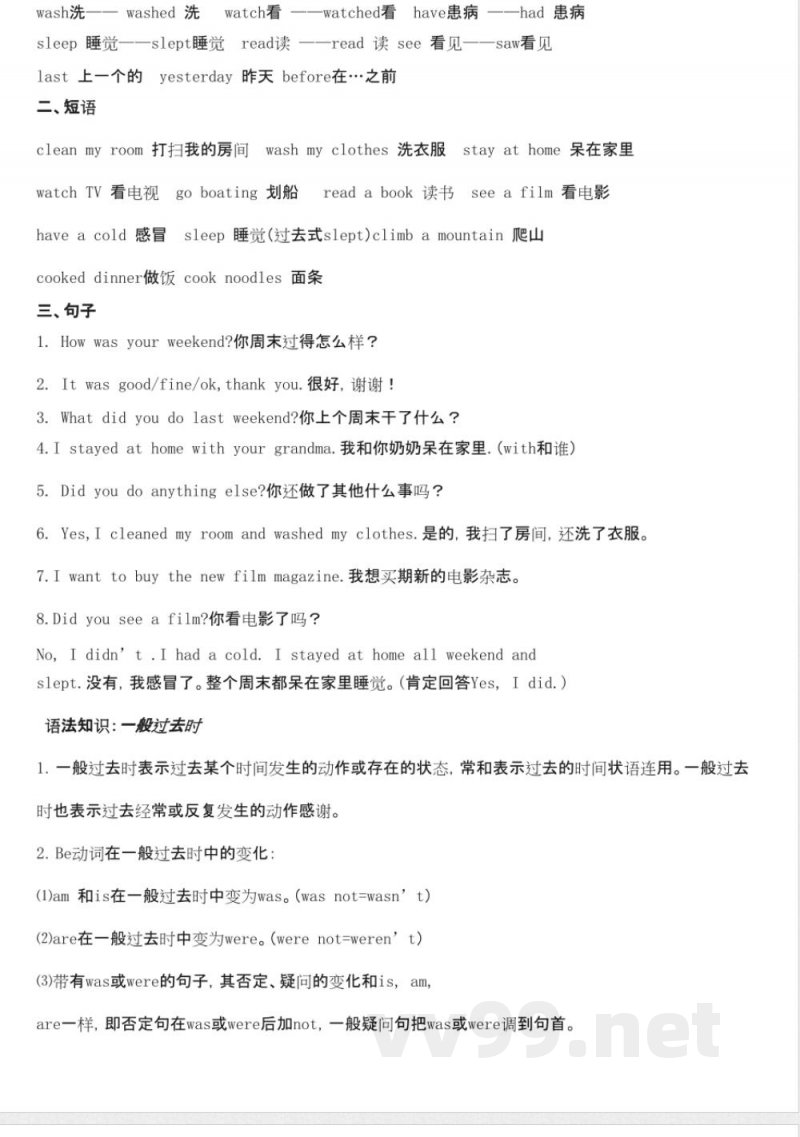
have 患病 - had
wash 洗 - washed
watch 看 - watched
sleep 睡觉 - slept
read 读 - read
see 看见 - saw
last 上一个
yesterday 昨天
before 在之前
二、短语
clean my room 打扫我的房间
wash my clothes 洗衣服
stay at home 呆在家里
watch TV 看电视
go boating 划船
read a book 读书
see a film 看电影
have a cold 感冒
sleep 睡觉(过去式 slept)
climb a mountain 爬山
cooked dinner 做饭
cook noodles 面条
三、句子
1. How was your weekend? 你周末过得怎么样?
2. It was good/fine/ok, thank you. 很好,谢谢!
3. What did you do last weekend? 你上个周末干了什么?
4. I stayed at home with my grandma. 我和你奶奶呆在家里。
5. Did you do anything else? 你还做了其他什么事吗?
6. Yes, I cleaned my room and washed my clothes. 是的,我扫了房间,还洗了衣服。
7. I want to buy the new film magazine. 我想买期新的电影杂志。
8. Did you see a film? 你看电影了吗? No, I didn’t. I had a cold. I stayed at home all weekend and slept. 没有,我感冒了。整个周末都呆在家里睡觉。
语法知识:一般过去时
1. 一般过去时表示过去某个时间发生的动作或存在的状态,常和表示过去的时间状语连用,也表示过去经常或反复发生的动作。
2. Be 动词在一般过去时中的变化:
(1) am 和 is 变为 was(was not = wasn’t)
(2) are 变为 were(were not = weren’t)
(3) 带有 was 或 were 的句子,其否定、疑问变化和 is, am, are 一样,即否定句在 was 或 were 后加 not,一般疑问句把 was 或 were 调到句首。
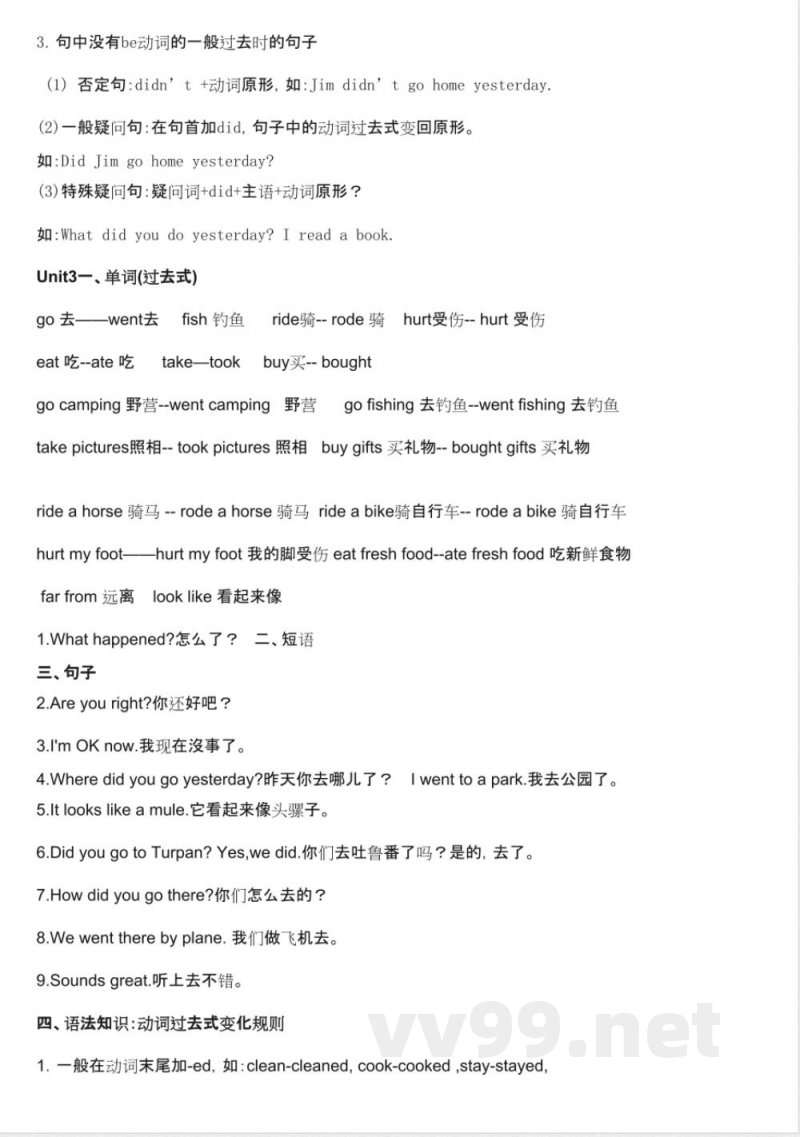
3. 没有 be 动词的一般过去时句子:
否定句:didn't + 动词原形,如 Jim didn't go home yesterday
一般疑问句:在句首加 did,句子中的动词过去式变回原形,如 Did Jim go home yesterday?
特殊疑问句:疑问词 + did + 主语 + 动词原形。
说明:本文档为学习资料,仅供教学与自学使用,资源免费下载,不含任何诱导下载或捆绑程序。
小提示:上面此文档内容仅展示完整文档里的部分内容, 若需要下载完整文档请 点击免费下载完整文档。