文章内容
抽屉底下的那张湿照片
雨来得毫无道理。上午还晴着,午后天忽然沉下来,雨点砸在空调外机上,铛铛作响,像有人在楼上倒铁珠。我站在窗前看街上的行人跑起来,一家便利店收起遮阳棚,水从路牙子上漫成小溪。
我本来在找一份文件。抽屉拉到底,文件没找到,摸出一张照片。
照片边角起了波浪,中间有一圈淡淡的水渍。我认得它,也认得这道水渍。一九九八年夏天拍的,照片里两个人蹲在水沟边,一人举一只纸船,裤腿卷到膝盖,笑得露出豁了的门牙。右边那个是我,左边是大勇。大勇家在水沟那头,他爸开修车铺,他从小钻车底,指甲缝里常年是黑的。
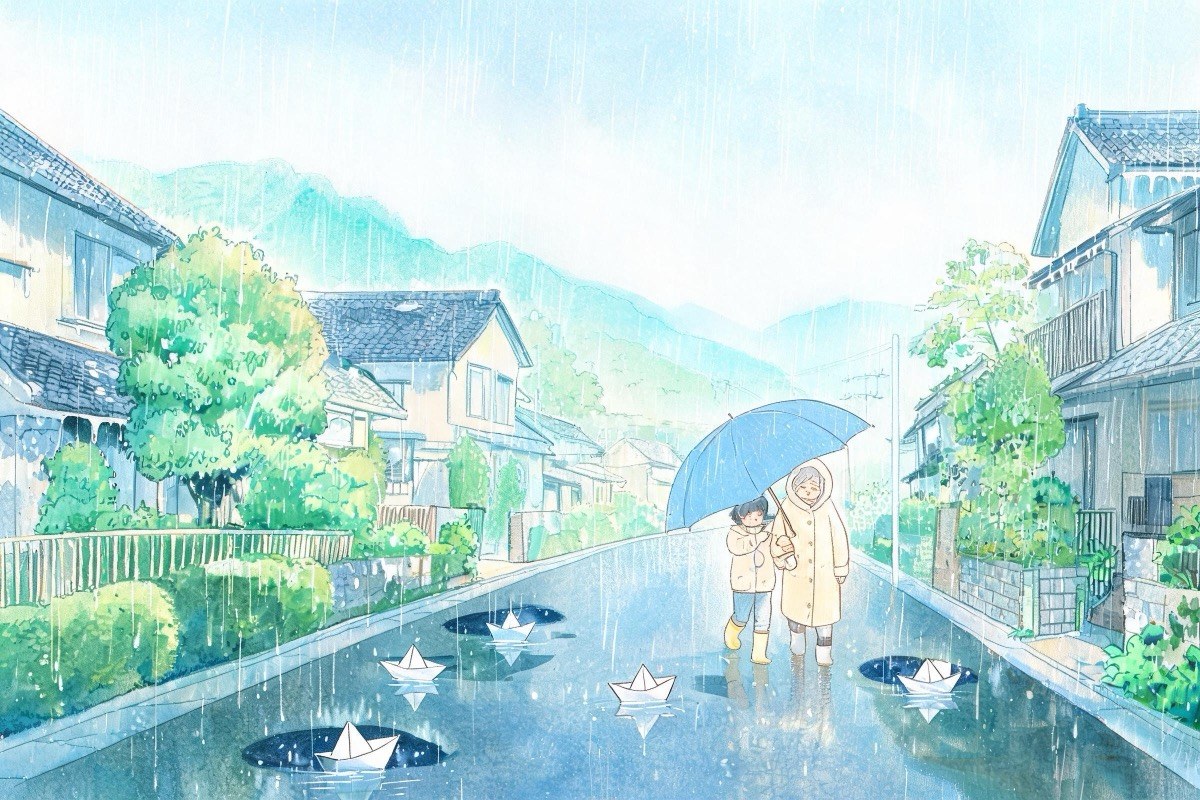
那年雨季长。放学我们不直接回家,蹲在水沟边放纸船,比谁的船走得远。有一回雨骤,我们没带伞,索性不跑,顶着雨走,鞋提在手里,路过谁家的瓜棚还顺手摘一根黄瓜,在雨里擦了啃。第二天我们发现纸船泡烂在沟口,两个人又折了一晚上新船,糊得比昨天更厚。
拍这张照片的是村里来支教的老师,他走之前给我们班一人冲了一张。照片发下来,大勇把他那张别在语文书的最后一页。暑假结束他转学去县城他叔那里,书留在家里,照片不知去向。我这张夹在相册里,后来搬家,相册泡过水,我一张一张拿出来晾,多数糊了,这张捡回来,留下水渍,人还看得清。
我拿着这张湿过又干的照片站在窗前,雨声哗哗。大勇后来我见过两次,一次同学聚会,一次在县城办事碰见。他胖了,递名片,名片上印着汽修厂厂长。我们说话客气,聊车、聊房价,没聊水沟。临走他拍拍我肩膀说改天聚,我们都知道没有改天。
雨小下去。我把照片放回抽屉,没再找那份文件。窗外水沟的水还在急,纸船当然早就不放了。我忽然想起一件事,当年大勇转学前一天,塞给我一颗玻璃弹珠,说放他那儿一颗,改天来拿。那颗弹珠我搬了五次家还留着,在阳台的罐子里。改天没来拿,也没人再来拿。我把弹珠从罐子里捏出来,攥了一会儿,放回原处。
The Wet Photograph Under the Drawer
The rain came for no reason. The morning had been clear; in the afternoon the sky suddenly sank, and drops hammered the air-conditioning unit outside, clang, clang, as if someone upstairs were pouring out iron beads. I stood at the window watching pedestrians break into a run, a convenience store folding up its awning, water spilling over the curb into a little stream.
I had only been looking for a document. I pulled the drawer all the way out, found no document, and fished out a photograph.
Its corners had rippled, and a faint ring of water stain crossed the middle. I recognized the photo, and I recognized the stain. It was taken in the summer of 1998. Two boys crouch beside a ditch in it, each holding a paper boat, trouser legs rolled to the knee, grinning with chipped front teeth. The one on the right is me; on the left is Da Yong. Da Yong's home was on the far side of the ditch. His father ran a repair shop; he crawled under cars from childhood, and the seams of his nails were permanently black.
That year the rainy season dragged on. After school we did not go straight home; we squatted by the ditch setting paper boats afloat, racing to see whose would travel farther. Once the rain came down so hard we had no umbrellas, so we simply stopped running and walked through it, shoes in hand, and on the way we picked a cucumber from someone's trellis and wiped it in the rain and ate it. The next day we found our boats sodden to pulp at the mouth of the ditch, and we spent another evening folding new ones, pasted thicker than the day before.
The photo was taken by a teacher who had come to our village to teach. Before leaving, he printed one for every student. Da Yong tucked his copy into the last page of his Chinese textbook. At the end of summer he transferred to his uncle's place in the county town; the book stayed at home, and the photo's whereabouts became unknown. Mine went into an album. Later, during a move, the album got soaked. I took the photos out one by one to dry; most blurred. I saved this one. It kept the water stain, but the faces were still clear.
I stood at the window holding this once-wet, now-dry photograph, the rain roaring. I had seen Da Yong twice since: once at a class reunion, once by chance when I was on business in the county town. He had grown stout and handed me a card that read, manager of an auto repair shop. We were polite, talking about cars and housing prices. We did not talk about the ditch. As he left he patted my shoulder and said let's get together sometime. We both knew there was no sometime.
The rain eased. I put the photo back in the drawer and stopped looking for the document. Outside, the ditch water still ran fast; paper boats, of course, had long stopped being launched. Then I remembered something: the day before Da Yong transferred, he pressed a glass marble into my hand and said he was keeping one at his place too, come get it sometime. I still have that marble after five moves, in a jar on the balcony. Sometime never came, and no one ever came to claim his. I took my marble out of the jar, held it a while, and put it back.
雨点砸在铁皮棚上的下午
我是回来给外婆翻晒谷子的。谷子刚摊开,天就黑了半边,雨先是一滴一滴试,砸在晒席上冒起小坑,接着整片落下来。外婆喊,收。我们俩踩着雨抢,谷粒湿滑,耙子推不动,最后半席谷子还是让雨浇透了。
躲进杂物间,头顶是铁皮棚,雨砸得震天响,说话要凑近。外婆去灶房烧姜汤,我一个人翻旧竹筐找干柴,筐底翻出一张黑白照片。
照片上两个小子站在一堵土墙前,都穿凉鞋,右边那个左手举着一片芭蕉叶,叶子的梗折过一道,像举着一面旗。那是我和表哥小军,十一二岁的样子。那年暑假我寄住在外婆家,天天跟他到处跑。
小军是我们那一片孩子里的头。他认得每条水沟通向哪里,知道雨大时田埂哪一段会塌。有一回暴雨,沟水涨了,他领着我们五个,排成一队蹚过没膝的水去上游看决口,回来每人裤子上都是泥,他妈拿笤帚追他,他绕着晒谷场跑,雨还没停,笑声比雨大。
他还发明过用芭蕉叶做伞。叶子太大,梗要折一道才能撑起来,我们轮流举,举到叶子烂了才散伙。那张照片就是举叶子那天,村里照相的师傅赶集路过,收了我们五毛钱拍的。冲出来照片,小军说他举叶子那张最神气,要了一张,剩下的他让我留着。
后来小军跟他爸妈去了城里,在工地、在厂里换着干活,过年回来待两天又走。我们在堂屋里坐着,他递烟给我,我不抽,他就不抽了。他说城里下雨没意思,全是水泥地,水一冲就进下水道,看不见水往哪里跑。他说这话的时候望着门外,门外是那条他闭着眼都能走的田埂。
前年小军在工地摔伤了腰,躺着养,我去看过他一次。他躺在那间出租屋里,让我给他讲讲外婆的屋还在不在。我说在。他哦了一声,说那沟还在不在。我说还在,就是没人蹚了。他没接话,过了会儿说,下次下雨,你替我在屋后听一听。
姜汤端来了,外婆催我喝。头顶铁皮棚还在响,和几十年前一个声音。我把照片揣进兜里,出去继续翻谷子。雨大,湿谷子翻不动,外婆说算了,让雨下吧。我们站在檐下看雨帘。这场雨,我替他在听了。
The Afternoon the Rain Beat on the Tin Roof
I had come back to help my grandmother turn the grain out to dry. We had barely spread it when half the sky went dark. The rain tested us drop by drop first, pitting the wet grain on the mat, then fell all at once. Grandmother shouted, gather it. We tramped through the rain raking it in, the soaked kernels slick, the rake refusing to slide, and in the end half the matful was watered through anyway.
We took shelter in the storage shed, its tin roof roaring overhead so that we had to lean close to be heard. Grandmother went to the kitchen to make ginger soup. Alone, I rummaged through an old bamboo basket for dry kindling and found a black-and-white photograph at the bottom.
In it two boys stand before an earthen wall, both in sandals; the one on the right holds up a banana leaf, its stem bent once so it stands like a flag. That is my cousin Xiao Jun and me, eleven or twelve years old. That summer I had boarded at my grandmother's, and every day I ran around with him.
Xiao Jun was the chief of our patch of children. He knew where every ditch led and which stretch of the paddy ridge gave way in heavy rain. Once, in a downpour, the ditch rose to knee height and he led the five of us in single file across the water to check a breach upstream. We came back caked in mud to the thigh. His mother chased him around the grain field with a broom, the rain still falling, and his laughter was louder than the rain.
He had also invented banana-leaf umbrellas. The leaves were so broad that the stem had to be bent once to hold them up. We took turns carrying them until the leaves shredded, and only then did we call it a day. That photograph was taken on the leaf-carrying day, by a traveling village photographer who passed through the market and charged us fifty cents. When the prints came back, Xiao Jun said his leaf-bearing pose was the best and kept one copy; he told me to keep the rest.
Later Xiao Jun followed his parents to the city, moving between construction sites and factories, coming home for two days at New Year and leaving again. We would sit in the main hall and he would offer me a cigarette; when I declined, he didn't smoke either. He said rain in the city was pointless, all concrete, the water rushing straight into drains where you could not see where it went. He said this while looking out the door, at the paddy ridge he could walk with his eyes shut.
The year before last he fell and hurt his back at a site and took to his bed. I visited him once. He lay in that rented room and asked me to tell him whether grandmother's house still stood. I said it does. He said oh, then asked whether the ditch still ran. I said it does, only no one wades it anymore. He did not answer right away; after a while he said, next time it rains, listen to it for me from behind the house.
The ginger soup arrived, and grandmother urged me to drink. Overhead the tin roof kept up its roar, the same sound as decades ago. I tucked the photograph into my pocket and went out to turn the grain again. The rain was too heavy to work the wet grain, and grandmother said forget it, let it rain. We stood under the eaves watching the curtain of water. This rain, I am listening to it for him.
小提示:上面此文档内容仅展示完整文档里的部分内容, 若需要下载完整文档请 点击免费下载完整文档 。